
Shipping guide · Americas
Shipping from China and Hong Kong to Canada
Canada changed how importing works when CBSA moved to the CARM system. The importer of record now has to be registered in the CARM portal and post its own financial security, rather than relying on a broker bond as used to be normal practice.
- Customs authority
- Canada Border Services Agency (CBSA)
- Key registration
- CARM portal registration and financial security, required of the importer
- Importer registration
- Business Number with an import/export (RM) account
- Import tax
- GST 5 percent, plus provincial sales tax depending on the province
- Foreign companies
- The non resident importer route is well established
- Main entry points
- Vancouver and Prince Rupert by sea, Toronto and Vancouver by air
That change is the first thing to settle, because an importer who is not properly registered and secured in CARM cannot release goods in the way they may have done for years. It affects Canadian companies and foreign non resident importers alike, and registration is not instant.
On the freight side Canada has an advantage most importers underuse: Prince Rupert is the closest North American port to Asia, with a direct rail connection into the continental interior. Vancouver has the volume and the services, Prince Rupert has the transit time and much less congestion.
Canada also has product requirements that are cultural rather than technical. Bilingual English and French labelling is a legal requirement for most consumer goods, and it is checked. Discovering it after the container has landed means relabelling in Canada at Canadian cost.
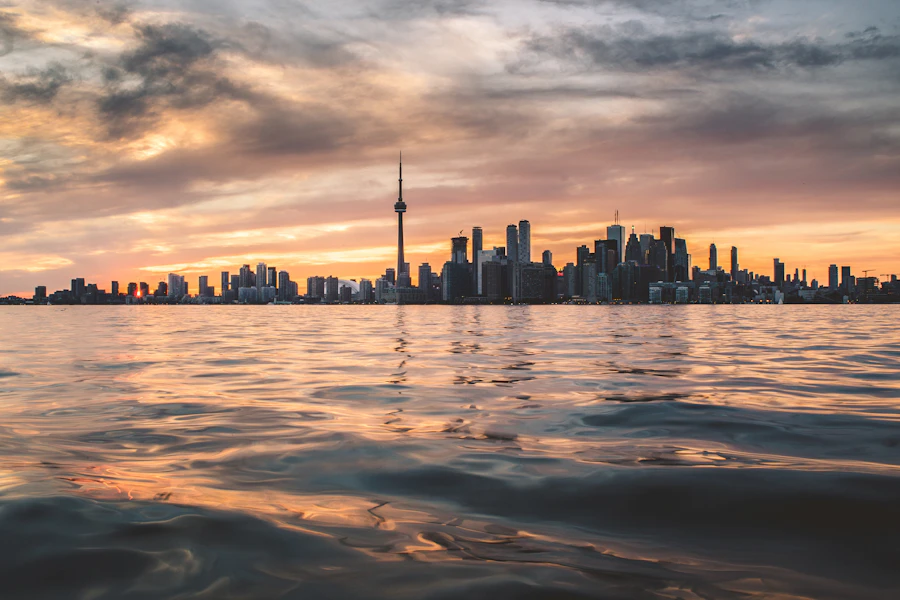
Where cargo lands
Main freight and distribution centres
Toronto
The largest market and the main air gateway, with the densest distribution and customs brokerage capacity.
Vancouver
The main Pacific port and gateway, with a large logistics cluster around it.
Montreal
The eastern port and the main French speaking market, with its own distribution network.
Calgary and Edmonton
The prairie hubs, serving the energy industry and western distribution, reached by rail from the coast.
Halifax
The Atlantic gateway, deepwater and closest to Europe, with rail connections west.
Sea freight
Ports of entry and what they mean for your cargo
Vancouver
The largest Canadian port, with the widest choice of Asian services and full rail and road connections east.
Prince Rupert
The closest North American port to Asia and typically the shortest Pacific crossing, with a dedicated rail connection inland and far less congestion than Vancouver.
Montreal
The main eastern container port, serving Quebec, Ontario and the northeastern United States.
Halifax
Deepwater Atlantic port able to take large vessels, with rail connections into central Canada.
Prince Rupert is genuinely underused. For cargo moving inland by rail to Toronto, Calgary or Chicago, the combination of a shorter ocean leg and an uncongested terminal is often faster than Vancouver.
Canadian rail is the backbone of inland distribution, and it works well, but it means the port and the rail schedule have to be planned together rather than separately.
Winter affects prairie and eastern operations. It rarely stops cargo, but it does widen the range of realistic delivery dates.
Air freight
Airports and when air is the right answer
Toronto Pearson (YYZ)
The main air cargo gateway, with the widest connectivity and full customs facilities.
Vancouver (YVR)
The Pacific air gateway with strong direct capacity from Asia.
Montreal Mirabel (YMX)
A dedicated cargo airport serving the east, freighter friendly.
Calgary (YYC)
Western hub with growing cargo capability, convenient for the prairie provinces.
Direct air capacity from Asia into Vancouver and Toronto is good, so air freight into Canada rarely needs to route through the United States, which avoids a second customs jurisdiction.
Where cargo does transit the US, it becomes a US customs movement as well as a Canadian import. That is manageable but it should be a deliberate choice rather than an accident of routing.
Indicative transit times
How long the movement usually takes
- Sea FCL, South China to Vancouver or Prince RupertAround 14 to 20 days port to portPrince Rupert is typically the shortest crossing of the two.
- Rail from the Pacific coast to Toronto or MontrealAround 5 to 9 daysAdded to the ocean transit, plus terminal handling.
- Sea FCL, South China to MontrealAround 30 to 40 days port to portAll water routing, longer at sea but landing the cargo in the east directly.
- Air freight, Hong Kong or South China to Toronto or VancouverAround 4 to 8 days door to doorStandard consolidated service including pickup, handling and clearance.
These ranges are indicative and exist to help you plan. Real transit time depends on the service, the season, the routing and the clearance itself, and we confirm it per shipment rather than publish it as a promise.
Customs
How clearance into Canada actually works
The competent authority is Canada Border Services Agency (CBSA).
Under CARM, the importer of record must be registered in the CBSA portal and must post its own financial security to obtain release prior to payment. The older practice of relying on a customs broker security is no longer the default, and an unregistered importer will find itself unable to operate normally.
A Business Number with an import/export account is required. Foreign companies without a Canadian presence can register as non resident importers, which is a well-established route, but it carries obligations including GST registration in most cases.
GST is charged at 5 percent on imports, and provincial sales tax may apply depending on the province and the goods. Registered businesses recover GST through their regular filings.
Duty depends on the tariff classification, and Canada has trade agreements that reduce or eliminate duty for goods originating in certain countries. Chinese origin goods generally do not benefit from those preferences, so the applicable rate is the standard one unless the origin says otherwise.
CBSA audits after release rather than checking everything at the border, so valuation and classification errors tend to surface later, with interest. Getting them right at the start is cheaper than correcting them.
Documentation
What you need to have ready
Commercial invoice
Value, terms, origin and a description precise enough to classify.
Packing list
Piece counts, weights and dimensions per package.
Bill of Lading or Air Waybill
The transport contract and the release instrument.
CARM registration and financial security
Held by the importer of record. Without it, normal release is not available.
Business Number with import/export account
The importer identifier used on every entry.
Certificate of origin
Where a trade agreement provides preferential treatment.
Bilingual labelling
English and French labelling is a legal requirement for most consumer goods, and must be right before the goods are sold.
Product specific certificates
Health Canada, CFIA or dangerous goods documentation depending on the product.
Controlled and restricted goods
What gets stopped, and why
- Bilingual English and French labelling is required for most consumer products. This is a compliance requirement, not a customs formality, and relabelling after arrival is expensive.
- Food, plants and animal products fall under the Canadian Food Inspection Agency with their own permits and inspection requirements.
- Consumer product safety rules under Health Canada apply to a wide range of goods, including children products, where the requirements are strict.
- Electrical products generally need certification recognised in Canada, which is not automatically satisfied by a US or European mark.
- Forced labour provisions apply to imports, and goods with problematic supply chain links can be refused.
- Wood packaging must comply with ISPM 15.
Working with Velonex
What clients usually bring us in for on this lane
- Importers who need CARM registration and security sorted before shipping, since it now determines whether the goods can be released at all.
- Using Prince Rupert rather than defaulting to Vancouver, which for inland rail destinations can save both days and congestion risk.
- Foreign companies setting up as non resident importers, where the registration, GST position and broker relationship all have to exist before the first container.
- Consumer goods where bilingual labelling has to be produced at origin rather than fixed expensively in a Canadian warehouse.
- Cargo that would otherwise transit the United States, where routing directly into Canada avoids a second customs jurisdiction entirely.
Get a quote
Tell us what needs to move to Canada
We listen before we quote. Share the cargo, the deadline and the constraint, and we will come back with a route that accounts for all three, the documents it will need and a timeline we can stand behind.
Your details
Includes your name, company name and email address
Shipment route
Includes your pickup location and destination
Cargo type
Includes the type of cargo you are shipping
Special requirements
Includes a short note about your challenge
Timeline
Includes your desired timeline
Your quote
A tailored response based on everything above

Corporate logistics partner
Trust, clarity and operational follow through for complex cargo.
Not ready for a quote? Email info@velonex-hk.com or message us on WhatsApp with the question and we will answer it.
Sources
Where this information comes from
- Canada Border Services Agency, importing
- CBSA Assessment and Revenue Management (CARM)
- Canadian Customs Tariff
- Port of Prince Rupert
General guidance, last reviewed August 2026. Customs rules and product requirements change, and the treatment of any specific shipment depends on its classification, origin and value. Confirm the detail with us or with the authority before you commit to a movement.
More in this region
Other guides for Americas
- ArgentinaObelisco, Buenos Aires
- BrazilRio de Janeiro coastline
- ChileSantiago skyline
- ColombiaOld town, Cartagena
- EcuadorQuito and the Andes
- MexicoMexico City from above
- PanamaPanama City waterfront
- PeruLima coastline
- United StatesManhattan skyline, New York
- UruguayMontevideo waterfront
See all 51 country guides, or tell us the destination you need and we will walk you through it.