
Shipping guide · Europe
Shipping from China and Hong Kong to Ireland
Ireland is an English speaking EU member state with a heavy concentration of technology, pharmaceutical and medical device manufacturing, which makes it a common European base for companies that have never imported into the EU before.
- Customs union
- European Union, common tariff and common customs code
- Customs authority
- Revenue Commissioners, Customs Division
- Import VAT
- Standard rate 23 percent, with postponed accounting available
- Importer registration
- EORI number, registered with Revenue
- Language
- English speaking, which lowers the barrier for first time EU importers
- Main entry points
- Dublin Port and Cork by sea, Dublin and Shannon by air
Ireland is an island, and every import arrives by sea or air. There are no land borders with the rest of the EU, so the routing question is simpler than on the continent but the options are fewer and the frequency lower.
Brexit changed the geography of Irish freight more than that of any other member state. Cargo used to move through Great Britain on the land bridge, which is now a customs movement through a third country. In response, direct ferry capacity between Ireland and the continent expanded sharply, and that continental routing is now the normal path for EU goods.
For cargo coming from Asia, this matters at the last leg. A container discharged in Rotterdam or Antwerp and fed to Dublin is a standard routing, but whether it clears customs on the continent or in Ireland changes who carries the obligations and where the VAT falls.
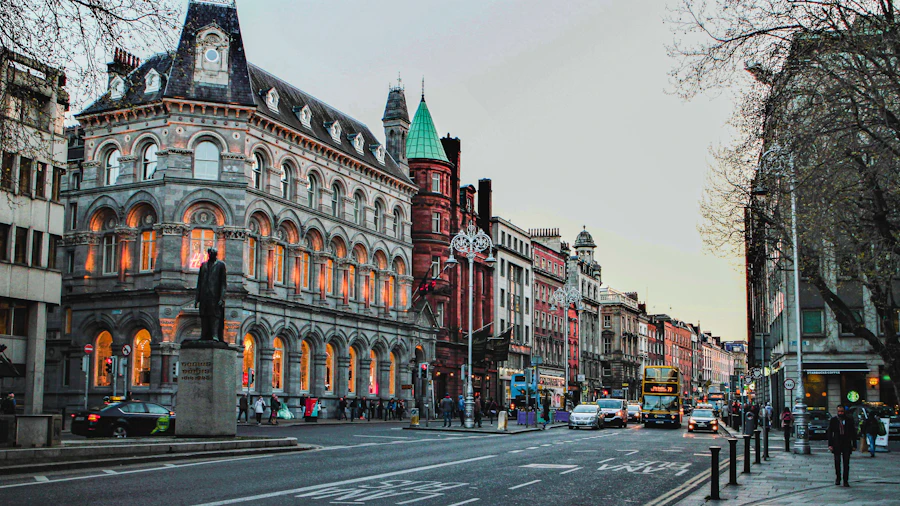
Where cargo lands
Main freight and distribution centres
Dublin
The dominant market, the main port and the main airport, with most national distribution built around it.
Cork
The southern gateway with its own deepwater port at Ringaskiddy, and a strong pharmaceutical and chemical manufacturing base.
Limerick and Shannon
The mid west, with Shannon airport and a long established free zone and aviation industry around it.
Galway
The west, with medical device manufacturing and its associated component flows.
Sea freight
Ports of entry and what they mean for your cargo
Dublin Port
The busiest port in the country and the entry point for most containerised imports, with direct continental ferry services and onward distribution across the island.
Cork (Ringaskiddy)
Deepwater facility serving the south, and the natural entry for the pharmaceutical and chemical cluster around Cork.
Rosslare Europort
The main direct ferry link to France and Spain, whose capacity expanded significantly once the British land bridge became a third country route.
Waterford and Shannon Foynes
Smaller ports handling bulk, project and specialised cargo, useful when the piece does not fit conventional container handling.
Almost nothing sails direct from Asia to Ireland. The realistic routing is a transhipment or feeder from a large continental hub, most often Rotterdam or Antwerp, which adds days that need to be in the plan from the start.
The decision of where to clear is the important one. Clearing on the continent and moving as EU goods, or moving under transit and clearing in Ireland, produce different VAT and administrative outcomes. Neither is automatically better, but it should be a choice.
Moving cargo through Great Britain to reach Ireland is still possible but now involves a third country. Unless there is a strong reason, direct continental routings avoid the complication entirely.
Air freight
Airports and when air is the right answer
Dublin (DUB)
The main air cargo gateway with the widest connectivity and full customs facilities.
Shannon (SNN)
Freighter capable with a long history in aviation logistics and a free zone alongside it.
Cork (ORK)
Regional gateway serving the southern manufacturing cluster.
Air freight from Asia into Ireland normally routes through a larger European hub, so the realistic transit is a little longer than into Frankfurt or Amsterdam.
For high value technology and medical device cargo, which is a significant part of Irish import traffic, the handling quality and security at destination usually matters more than shaving a day off the flight.
Indicative transit times
How long the movement usually takes
- Sea FCL, South China to Dublin via a continental hubAround 35 to 45 days port to portIncludes the transhipment or feeder leg from Rotterdam, Antwerp or a similar hub.
- Sea LCL, South China to IrelandAround 42 to 55 days door to doorTwo consolidation points and a feeder leg all add time.
- Air freight, Hong Kong or South China to DublinAround 5 to 9 days door to doorUsually via a European hub, including handling and clearance.
- Express or priority airAround 4 to 6 days door to doorFor deadline-driven cargo where the routing is built around the date.
These ranges are indicative and exist to help you plan. Real transit time depends on the service, the season, the routing and the clearance itself, and we confirm it per shipment rather than publish it as a promise.
Customs
How clearance into Ireland actually works
The competent authority is Revenue Commissioners, Customs Division.
Ireland applies the EU Common Customs Tariff, so the duty rate follows the HS classification of the goods, exactly as elsewhere in the union.
Import VAT is 23 percent, and postponed accounting is available to registered importers, allowing the VAT to be accounted for on the return rather than paid at the point of import. That removes the cash flow burden but has to be applied correctly on the declaration.
An EORI number registered with Revenue is required. Irish customs administration is generally accessible and communicates in English, which is a practical advantage for companies making their first EU import.
Because most cargo arrives via another member state, the transit versus clearance decision comes up on almost every shipment. Deciding it in advance avoids the situation where the cargo has already been cleared somewhere the importer did not intend.
Northern Ireland operates under its own arrangements as part of the United Kingdom with special EU alignment. If deliveries cross that border, it needs to be handled as its own question.
Documentation
What you need to have ready
Commercial invoice
Value, terms and clear goods description, consistent with the transport document.
Packing list
Piece counts, weights and dimensions per package.
Bill of Lading or Air Waybill
The transport contract and the release instrument.
EORI number
Registered with Revenue before the first clearance.
Certificate of origin
Where preferential duty treatment is being claimed under an EU agreement.
CE conformity documentation
For electronics, machinery, medical devices, toys and lighting.
Transit documentation
Where the goods move from a continental port to Ireland under customs transit rather than as cleared EU goods.
Product specific certificates
Phytosanitary, veterinary, CITES or dangerous goods documentation as applicable.
Controlled and restricted goods
What gets stopped, and why
- Medical devices and pharmaceutical inputs, a large part of Irish import traffic, carry their own regulatory approvals entirely separate from customs. Customs clearance does not make a product legally placeable on the market.
- Food, plants and animal origin products require an approved border control post and the corresponding sanitary certification.
- Alcohol and tobacco fall under excise rules with additional procedures and duties.
- Dual use goods and export controlled technology require licences, relevant given the technology sector concentration.
- Dangerous goods travel under IMDG by sea and IATA by air with their own documentation and lead times.
- Wood packaging must comply with ISPM 15 and carry the mark.
Working with Velonex
What clients usually bring us in for on this lane
- Companies making their first EU import who want an English speaking jurisdiction, where the customs conversation is easier to control.
- High value technology and medical device components, where secure handling and predictable delivery matter more than freight cost.
- Importers who need the transit versus clear on the continent decision made deliberately rather than inherited from a carrier routing.
- Retail and hospitality fit-outs in Dublin, where the feeder leg from the continent has to be accounted for in the opening date.
- Project and outsized cargo through the smaller ports, where handling access is easier than at Dublin.
Get a quote
Tell us what needs to move to Ireland
We listen before we quote. Share the cargo, the deadline and the constraint, and we will come back with a route that accounts for all three, the documents it will need and a timeline we can stand behind.
Your details
Includes your name, company name and email address
Shipment route
Includes your pickup location and destination
Cargo type
Includes the type of cargo you are shipping
Special requirements
Includes a short note about your challenge
Timeline
Includes your desired timeline
Your quote
A tailored response based on everything above

Corporate logistics partner
Trust, clarity and operational follow through for complex cargo.
Not ready for a quote? Email info@velonex-hk.com or message us on WhatsApp with the question and we will answer it.
Sources
Where this information comes from
- Revenue Commissioners, Customs
- European Commission, TARIC tariff database
- Dublin Port Company
- Port of Cork
General guidance, last reviewed August 2026. Customs rules and product requirements change, and the treatment of any specific shipment depends on its classification, origin and value. Confirm the detail with us or with the authority before you commit to a movement.
More in this region
Other guides for Europe
- AustriaSt Stephen's Cathedral, Vienna
- BelgiumAntwerp from above
- CzechiaCharles Bridge and Prague Castle
- DenmarkNyhavn, Copenhagen
- FinlandHelsinki Cathedral and waterfront
- FranceEiffel Tower, Paris
- GermanyShip at Hamburg harbour
- GreeceAcropolis of Athens
- HungaryHungarian Parliament on the Danube
- ItalyColosseum, Rome
- NetherlandsRotterdam waterfront
- NorwayOslo waterfront
- PolandGdansk from above
- PortugalYellow tram in Lisbon
- RomaniaPalace of the Parliament, Bucharest
- SpainTemple del Sagrat Cor on Tibidabo, Barcelona
- SwedenGamla Stan, Stockholm
- SwitzerlandZurich from above
- TürkiyeFerry on the Bosphorus, Istanbul
- United KingdomTower Bridge and the City, London
See all 51 country guides, or tell us the destination you need and we will walk you through it.