
Shipping guide · Europe
Shipping from China and Hong Kong to the Netherlands
The Netherlands is where a very large share of Asian cargo physically enters the European Union, and it is built for that role. The most valuable thing to understand about importing here is not the port, it is the Article 23 licence that lets you defer import VAT instead of paying it at the border.
- Customs union
- European Union, common tariff and common customs code
- Customs authority
- Douane, part of the Dutch Tax Administration
- Import VAT
- BTW, standard rate 21 percent
- VAT deferment
- Article 23 licence shifts import VAT to the periodic return
- For foreign companies
- Fiscal representation is standard practice and gives access to Article 23
- Main entry points
- Rotterdam by sea, Amsterdam Schiphol by air
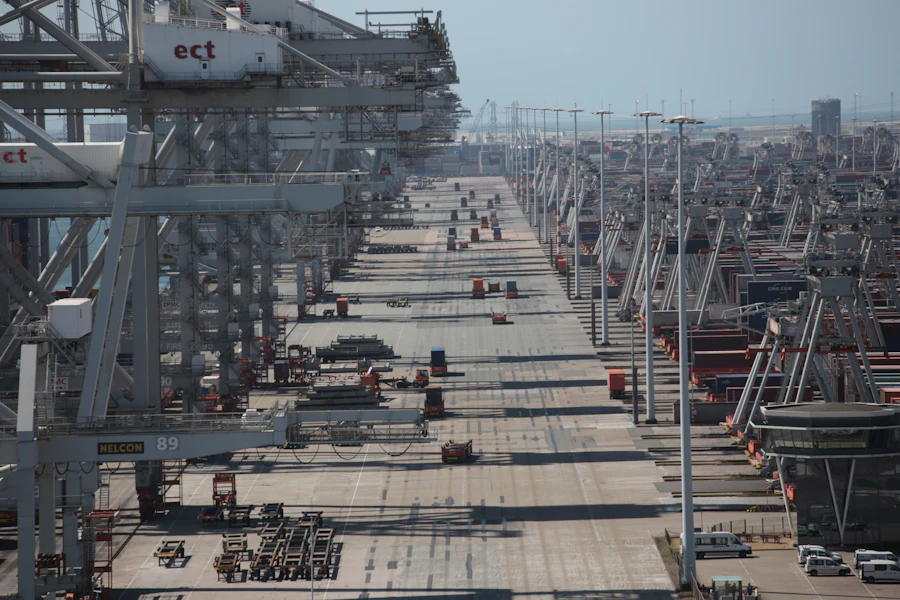
Rotterdam is the largest port in Europe by a wide margin, with the deepest water, the most direct Asian services and onward connections by barge, rail and road into Germany, Belgium and France. For a lot of European importers the Netherlands is not the destination at all, it is the entry point.
That gateway role is supported by tax design rather than geography alone. With an Article 23 licence, import VAT is not paid at clearance but shifted to the periodic VAT return, where it is declared and deducted in the same filing. The cash effect is the same as in France, but here it is a licence you apply for rather than an automatic rule.
A foreign company without a Dutch entity can still use this through a fiscal representative, which is a well-established and completely normal arrangement in the Netherlands. It is one of the main reasons non EU companies choose to import through Rotterdam.
Where cargo lands
Main freight and distribution centres
Rotterdam
The port itself plus the largest concentration of warehousing, customs brokerage and distribution capacity in the country.
Amsterdam
Schiphol air cargo and a dense cluster of e-commerce and high-value distribution around it.
Venlo and Tilburg
The southern logistics corridor towards the German border, where a lot of European distribution centres actually sit.
Eindhoven
High tech manufacturing region, with the component and equipment flows that come with it.
Sea freight
Ports of entry and what they mean for your cargo
Rotterdam
The largest European port. Deepest water, most direct Asian services, and onward barge, rail and road connections across northwest Europe. If a service calls in Europe, it usually calls here.
Amsterdam
Second Dutch port, stronger on bulk and project cargo than on containers, and useful when Rotterdam is congested.
Vlissingen and Moerdijk
Smaller ports handling project cargo, breakbulk and industrial traffic, with easier access for oversized pieces.
Rotterdam being the first or last call on an Asian rotation matters for schedule reliability. It is usually the port where a delayed vessel makes up time, and the one with the most alternatives when a service is cancelled.
Barge and rail connections inland are extensive and genuinely competitive. Cargo for the German Rhine belt or Belgium often clears in Rotterdam and moves on under transit or as a customs cleared domestic movement, and which of the two you choose has VAT consequences.
Deconsolidation options for LCL are the best in Europe here, which is why so many Asian consolidations are built to Rotterdam even when the final destination is elsewhere.
Air freight
Airports and when air is the right answer
Amsterdam Schiphol (AMS)
A top tier European air cargo hub with direct freighter and bellyhold capacity from Asia, and a very dense forwarding and handling ecosystem.
Maastricht Aachen (MST)
A freighter friendly regional airport used for full charters and outsized air cargo.
Liege, Belgium
Not Dutch, but close enough to the southern Netherlands that it is a realistic alternative for express and freighter capacity.
Schiphol has slot constraints that periodically affect freighter capacity, so for large or recurring air volumes it is worth checking alternatives at Liege or Maastricht rather than assuming Amsterdam.
For high-value cargo, the concentration of specialised handling at Schiphol, including secure and temperature controlled facilities, is a genuine advantage over smaller airports.
Indicative transit times
How long the movement usually takes
- Sea FCL, South China to RotterdamAround 30 to 38 days port to portThe widest choice of direct services of any European destination.
- Sea LCL, South China to RotterdamAround 36 to 46 days door to doorFrequent consolidations mean less waiting at origin than for smaller European markets.
- Air freight, Hong Kong or South China to AmsterdamAround 4 to 8 days door to doorStandard consolidated service including pickup, handling and clearance.
- Onward barge to the German Rhine beltAround 1 to 3 days from RotterdamSlower than road but cheap, predictable and unaffected by driver shortages.
These ranges are indicative and exist to help you plan. Real transit time depends on the service, the season, the routing and the clearance itself, and we confirm it per shipment rather than publish it as a promise.
Customs
How clearance into Netherlands actually works
The competent authority is Douane, Netherlands Customs (Belastingdienst).
The Article 23 licence is the central fact about importing into the Netherlands. With it, import VAT is not paid at the border but reported on the periodic VAT return and deducted in the same filing, so it never becomes a cash outlay. Without it, 21 percent is financed on every shipment.
A company with no Dutch establishment can obtain the same effect through a fiscal representative, who holds the licence and handles the VAT reporting on the importer behalf. This is routine here, not an exception, and it is one of the main reasons non EU companies route their European imports through Rotterdam.
Duty follows the EU Common Customs Tariff and the HS classification of the goods. The Dutch customs administration is generally efficient and pragmatic, but it expects accurate declarations and audits after the fact.
Cargo entering through Rotterdam and destined for another EU country can move under customs transit and clear at destination, or clear in the Netherlands and travel as EU goods. The two options have different VAT and compliance consequences and should be chosen deliberately.
Bonded warehousing is widely available and well understood here, which suits importers who want to defer duty until goods are actually sold or distributed.
Documentation
What you need to have ready
Commercial invoice
Value, incoterm and goods description, consistent with everything else in the file.
Packing list
Piece counts, weights and dimensions per package.
Bill of Lading or Air Waybill
The transport contract and the release instrument at destination.
EORI number
Required for any operator dealing with EU customs.
Article 23 licence or fiscal representation agreement
What allows import VAT to be deferred to the VAT return instead of paid at the border.
Certificate of origin
Required to claim preferential duty where an agreement applies.
CE conformity documentation
For electronics, machinery, toys, lighting and construction products.
Product specific certificates
Phytosanitary, veterinary, CITES or dangerous goods documentation as applicable.
Controlled and restricted goods
What gets stopped, and why
- Rotterdam runs one of the most intensive container scanning and inspection operations in Europe, driven largely by narcotics enforcement. Legitimate cargo is occasionally caught in that net, and it costs days.
- Counterfeit enforcement is systematic. Branded goods need a supply chain the importer can evidence.
- Food, plants and animal origin products require an approved border control post and the corresponding sanitary or phytosanitary certification.
- Dual use goods, technology under export control and sanctioned items require licences and are checked carefully.
- Waste and end of life goods have their own strict shipment rules in the Netherlands, relevant for anyone moving returns, refurbished equipment or scrap.
- Wood packaging must comply with ISPM 15 and be marked.
Working with Velonex
What clients usually bring us in for on this lane
- Companies with no EU entity that want a European entry point where fiscal representation and VAT deferment are normal, well supported arrangements rather than special cases.
- Importers whose real destination is Germany, Belgium or France, where clearing in Rotterdam and moving inland by barge or rail can beat a direct call at the destination country.
- High-value electronics and devices, using the specialised secure handling at Schiphol rather than a general cargo facility.
- Project and outsized cargo through Vlissingen or Moerdijk, where access is easier than at a container terminal.
- Distribution setups that benefit from bonded warehousing, deferring duty until the goods actually move to their market.
Get a quote
Tell us what needs to move to Netherlands
We listen before we quote. Share the cargo, the deadline and the constraint, and we will come back with a route that accounts for all three, the documents it will need and a timeline we can stand behind.
Your details
Includes your name, company name and email address
Shipment route
Includes your pickup location and destination
Cargo type
Includes the type of cargo you are shipping
Special requirements
Includes a short note about your challenge
Timeline
Includes your desired timeline
Your quote
A tailored response based on everything above

Corporate logistics partner
Trust, clarity and operational follow through for complex cargo.
Not ready for a quote? Email info@velonex-hk.com or message us on WhatsApp with the question and we will answer it.
Sources
Where this information comes from
- Dutch Customs, Belastingdienst Douane
- European Commission, TARIC tariff database
- Port of Rotterdam Authority
- Amsterdam Schiphol Cargo
General guidance, last reviewed August 2026. Customs rules and product requirements change, and the treatment of any specific shipment depends on its classification, origin and value. Confirm the detail with us or with the authority before you commit to a movement.
More in this region
Other guides for Europe
- AustriaSt Stephen's Cathedral, Vienna
- BelgiumAntwerp from above
- CzechiaCharles Bridge and Prague Castle
- DenmarkNyhavn, Copenhagen
- FinlandHelsinki Cathedral and waterfront
- FranceEiffel Tower, Paris
- GermanyShip at Hamburg harbour
- GreeceAcropolis of Athens
- HungaryHungarian Parliament on the Danube
- IrelandDublin street
- ItalyColosseum, Rome
- NorwayOslo waterfront
- PolandGdansk from above
- PortugalYellow tram in Lisbon
- RomaniaPalace of the Parliament, Bucharest
- SpainTemple del Sagrat Cor on Tibidabo, Barcelona
- SwedenGamla Stan, Stockholm
- SwitzerlandZurich from above
- TürkiyeFerry on the Bosphorus, Istanbul
- United KingdomTower Bridge and the City, London
See all 51 country guides, or tell us the destination you need and we will walk you through it.