
Shipping guide · Americas
Shipping from China and Hong Kong to Uruguay
Uruguay is small, stable and structurally useful. Montevideo operates under a free port regime that lets goods be stored, consolidated and re-exported without formally entering the country, which makes it a practical staging point for the whole southern cone.
- Customs authority
- Direccion Nacional de Aduanas
- Free port
- Montevideo operates a free port regime for storage, handling and re-export
- Trade bloc
- Mercosur, applying the common external tariff to goods entering the market
- Import VAT
- IVA, standard rate 22 percent on goods entering the domestic market
- Regional role
- Staging point for Argentina, Brazil, Paraguay and Bolivia
- Main entry points
- Montevideo by sea, Carrasco by air
The free port status is the reason to pay attention to Uruguay. Goods can sit in the port area, be split, repacked, relabelled and sent onward to Argentina, Brazil, Paraguay or Bolivia without ever being imported into Uruguay or paying Uruguayan duty. Only what enters the domestic market is taxed.
For a company supplying several southern cone markets, that turns a set of separate and awkward imports into one movement plus regional distribution. It is particularly relevant given how volatile the Argentine import regime has been.
Uruguay itself is a small market, so most of the value here is structural rather than commercial. The country is politically and administratively stable, which in this region is a genuine operational asset rather than a talking point.
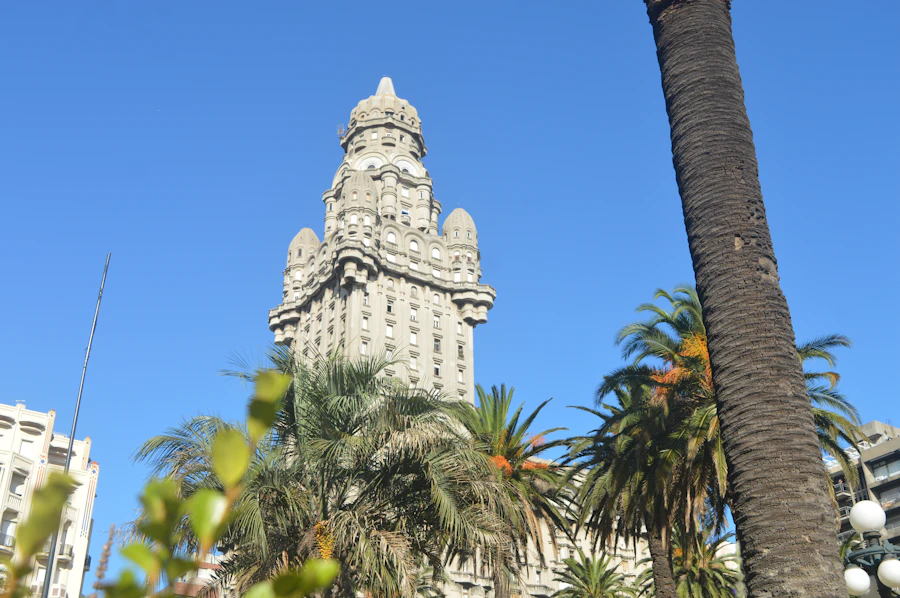
Where cargo lands
Main freight and distribution centres
Montevideo
The capital, the port, the free port area and effectively the entire logistics infrastructure of the country.
Nueva Palmira
River port on the Uruguay river, important for bulk and for cargo moving up the Parana Paraguay waterway.
Colonia
Close to Buenos Aires across the river, relevant for cargo moving into Argentina.
Sea freight
Ports of entry and what they mean for your cargo
Montevideo
The main container port, operating under free port status, and a regional transhipment and redistribution point for the southern cone.
Nueva Palmira
Free zone river port serving the inland waterway towards Paraguay and Bolivia.
Montevideo works both as a destination and as a transhipment hub for Argentine and Paraguayan cargo. Understanding which role a shipment is using changes the documentation entirely.
The inland waterway from Nueva Palmira up the Parana and Paraguay rivers is the practical way to reach Paraguay and parts of Bolivia. For landlocked destinations it is usually the only sensible route.
Because the free port allows handling without formal import, consolidation and relabelling for onward markets can be done here rather than at origin, which is useful when several destination countries have different requirements.
Air freight
Airports and when air is the right answer
Montevideo Carrasco (MVD)
The main air gateway, with a free airport regime that mirrors the free port logic for air cargo.
The free airport status at Carrasco means air cargo can also be stored and re-exported without formal import, which is used for regional distribution of high-value goods.
Air freight from Asia arrives via a hub, so the transit is longer than for a direct market, but the regional onward connectivity is good.
Indicative transit times
How long the movement usually takes
- Sea FCL, South China to MontevideoAround 35 to 48 days port to portUsually with a transhipment, commonly in Brazil or another regional hub.
- Sea LCL, South China to UruguayAround 45 to 58 days door to doorConsolidation and transhipment both add time.
- Onward regional distributionAround 2 to 10 daysTo Argentina, Brazil, Paraguay or Bolivia, depending on destination and mode.
- Air freight, Hong Kong or South China to MontevideoAround 6 to 11 days door to doorVia a hub, including handling and clearance.
These ranges are indicative and exist to help you plan. Real transit time depends on the service, the season, the routing and the clearance itself, and we confirm it per shipment rather than publish it as a promise.
Customs
How clearance into Uruguay actually works
The competent authority is Direccion Nacional de Aduanas de Uruguay.
Under the free port regime, goods in the port area are not considered imported into Uruguay. They can be stored indefinitely, handled, split and re-exported without duty or VAT, and no import declaration is required unless they enter the domestic market.
Goods that do enter the Uruguayan market are subject to the Mercosur common external tariff and IVA at 22 percent, in the normal way.
Uruguay also operates free zones separate from the free port, used for logistics, services and light manufacturing with their own tax treatment.
Administration is stable and predictable by regional standards, which matters when the alternative staging points in the region are not.
A foreign company can use the free port through a local logistics operator without needing to establish an Uruguayan importing entity, which is part of the appeal.
Documentation
What you need to have ready
Commercial invoice
Value, terms and a clear description consistent with the transport document.
Packing list
Piece counts, weights and dimensions per package.
Bill of Lading or Air Waybill
The transport contract and the release instrument.
Free port documentation
Covers entry into, handling within and re-export from the free port area.
Import declaration
Only for goods actually entering the Uruguayan domestic market.
Certificate of origin
Important for onward movements where the destination country applies preferences or Mercosur rules.
Uruguayan tax identification (RUT)
For goods entering the domestic market.
Product specific certificates
Health, sanitary or dangerous goods documentation depending on the cargo.
Controlled and restricted goods
What gets stopped, and why
- Goods re-exported to Mercosur partners must meet the destination country requirements, and the origin question determines whether Mercosur preferences apply on that leg.
- Food, health products and cosmetics entering the domestic market require approval from the Uruguayan health authority.
- Agricultural and animal products face sanitary controls, which the country enforces carefully given the importance of its own exports.
- Used goods face restrictions in several categories.
- Dangerous goods have their own handling requirements at the port and free zone facilities.
- Wood packaging must comply with ISPM 15.
Working with Velonex
What clients usually bring us in for on this lane
- Companies supplying several southern cone markets who would benefit from one movement into a stable free port rather than separate imports into each country.
- Holding stock outside a difficult jurisdiction, particularly while the Argentine import regime is uncertain, and releasing it as conditions allow.
- Consolidation and relabelling in the free port, so goods reach each destination market in the form that market requires.
- Cargo destined for Paraguay or Bolivia, where the inland waterway from Nueva Palmira is the practical route rather than an exotic one.
- High-value goods using the free airport regime at Carrasco for regional distribution without a formal import.
Get a quote
Tell us what needs to move to Uruguay
We listen before we quote. Share the cargo, the deadline and the constraint, and we will come back with a route that accounts for all three, the documents it will need and a timeline we can stand behind.
Your details
Includes your name, company name and email address
Shipment route
Includes your pickup location and destination
Cargo type
Includes the type of cargo you are shipping
Special requirements
Includes a short note about your challenge
Timeline
Includes your desired timeline
Your quote
A tailored response based on everything above

Corporate logistics partner
Trust, clarity and operational follow through for complex cargo.
Not ready for a quote? Email info@velonex-hk.com or message us on WhatsApp with the question and we will answer it.
Sources
Where this information comes from
- Direccion Nacional de Aduanas de Uruguay
- Administracion Nacional de Puertos
- Uruguay XXI, investment and export promotion
- Mercosur
General guidance, last reviewed August 2026. Customs rules and product requirements change, and the treatment of any specific shipment depends on its classification, origin and value. Confirm the detail with us or with the authority before you commit to a movement.
More in this region
Other guides for Americas
- ArgentinaObelisco, Buenos Aires
- BrazilRio de Janeiro coastline
- CanadaCN Tower and Toronto skyline
- ChileSantiago skyline
- ColombiaOld town, Cartagena
- EcuadorQuito and the Andes
- MexicoMexico City from above
- PanamaPanama City waterfront
- PeruLima coastline
- United StatesManhattan skyline, New York
See all 51 country guides, or tell us the destination you need and we will walk you through it.