
Shipping guide · Europe
Shipping from China and Hong Kong to Romania
Romania has the largest port on the Black Sea, and Constanta is a genuine deepwater gateway rather than a regional afterthought. For cargo from Asia it is also one of the shortest sea routings into the European Union.
- Customs union
- European Union, common tariff and common customs code
- Customs authority
- Romanian Customs Authority, under the Ministry of Finance
- Import VAT
- TVA, standard rate 21 percent
- Port position
- Constanta is the largest Black Sea port and a Danube gateway
- Hinterland
- Serves Romania plus a corridor towards Hungary, Serbia and central Europe
- Main entry points
- Constanta by sea, Bucharest Otopeni by air
Constanta sits at the point where the Suez route enters the Black Sea, and it connects onward by rail, road and, distinctively, by the Danube. That river access reaches deep into central Europe, and it is the reason the port serves not only Romania but a hinterland stretching towards Hungary, Serbia and Austria.
Romania itself has become a substantial manufacturing base, particularly in automotive, electronics assembly and industrial components. Much of what arrives from Asia is inputs for that production rather than consumer goods, which shifts the priority towards schedule reliability.
The trade off is that Constanta has fewer direct Asian services than the western Mediterranean ports, so service frequency and vessel size need checking per shipment. When a suitable service exists the transit is excellent; when it does not, a Mediterranean port with an inland leg may still win.
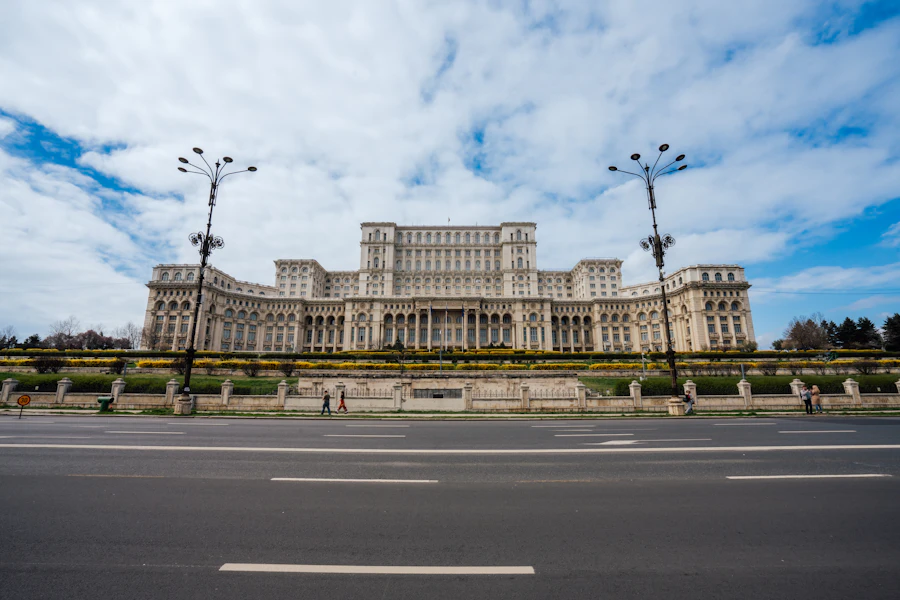
Where cargo lands
Main freight and distribution centres
Bucharest
The dominant market, the main air gateway and the largest concentration of distribution and customs brokerage.
Constanta
The port city itself, with the logistics and warehousing cluster that has grown around the terminal.
Timisoara and Arad
The western manufacturing belt near the Hungarian border, heavily oriented towards automotive and electronics.
Cluj-Napoca and Brasov
Transylvanian industrial and technology centres with their own component import flows.
Sea freight
Ports of entry and what they mean for your cargo
Constanta
The largest Black Sea port, deepwater, with container, bulk and project cargo capability and onward rail, road and Danube connections.
Galati and Braila
Danube ports handling bulk, steel and project cargo, connected to the river corridor into central Europe.
Piraeus, Greece or an Adriatic port
Not Romanian, but a realistic alternative entry when Constanta service frequency does not suit the shipment.
Constanta transit from Asia is competitive with the best Mediterranean options, but the number of direct services is smaller. Checking the actual service pattern before committing is worth more here than in a high frequency port.
The Danube connection is genuinely useful for bulk and heavy cargo moving towards Hungary, Serbia or Austria, and it is often overlooked in favour of road.
Inland road transport from Constanta to the western manufacturing belt is a long leg. Rail is available and worth comparing for volume.
Air freight
Airports and when air is the right answer
Bucharest Henri Coanda, Otopeni (OTP)
The main air cargo gateway with full customs facilities and the widest connectivity.
Timisoara (TSR)
Serves the western industrial region directly and has genuine cargo handling capability.
Cluj-Napoca (CLJ)
Regional gateway for Transylvania, avoiding a long road leg from Bucharest.
Air freight from Asia into Romania routes through a larger European hub, so the transit is a day or two longer than into the main continental gateways.
For the western manufacturing belt, flying into Timisoara or even into Budapest and trucking across is frequently faster than routing through Bucharest.
Indicative transit times
How long the movement usually takes
- Sea FCL, South China to ConstantaAround 26 to 35 days port to portCompetitive with the Mediterranean ports when a suitable direct service is running.
- Sea LCL, South China to RomaniaAround 36 to 48 days door to doorConsolidation options are thinner than for the larger European markets.
- Sea via a Mediterranean port with inland legAround 32 to 42 days door to doorSometimes the better option when Constanta service frequency does not fit the timing.
- Air freight, Hong Kong or South China to BucharestAround 5 to 9 days door to doorUsually one stop via a European hub, including handling and clearance.
These ranges are indicative and exist to help you plan. Real transit time depends on the service, the season, the routing and the clearance itself, and we confirm it per shipment rather than publish it as a promise.
Customs
How clearance into Romania actually works
The competent authority is Romanian Customs Authority (Autoritatea Vamala Romana).
Romania applies the EU Common Customs Tariff, so duty follows the HS classification of the goods.
Import VAT is charged at the Romanian standard rate, currently 21 percent. Romania has adjusted its VAT rates in recent years, so the applicable rate is one of the few figures worth confirming at the time of the shipment rather than relying on a figure remembered from a previous import.
Qualifying importers can defer import VAT to the VAT return rather than paying it at clearance, subject to conditions. Whether a specific company qualifies should be established before the first shipment.
An EORI number is required. A company with no EU establishment needs an Importer of Record arrangement or an indirect representative.
Documentation standards at Constanta are firm, and a file with ambiguities takes longer to clear than in the higher volume western ports. Preparing the paperwork properly in advance is the single most effective way to avoid delay here.
Documentation
What you need to have ready
Commercial invoice
Value, terms and a clear goods description, consistent with the transport document.
Packing list
Piece counts, weights and dimensions per package.
Bill of Lading or Air Waybill
The transport contract and the release instrument.
EORI number
Required for any operator dealing with EU customs.
Romanian VAT registration
For the local importer, and relevant to whether import VAT can be deferred.
Certificate of origin
Where preferential duty treatment is being claimed.
CE conformity documentation
For electronics, machinery, automotive components, toys and lighting.
Product specific certificates
Phytosanitary, veterinary, CITES or dangerous goods documentation as applicable.
Controlled and restricted goods
What gets stopped, and why
- Romania sits on the eastern edge of the European Union, so sanctions and export control enforcement is applied strictly, including for goods that could be re-exported eastwards.
- Product conformity checks on consumer electronics, toys and lighting are routine and a missing conformity file stops the release.
- Food, plants and animal origin products must enter through an approved border control post with the corresponding certification.
- Excise goods, including alcohol, tobacco and energy products, have their own regime alongside customs.
- Dual use goods and controlled technology require licences.
- Wood packaging must comply with ISPM 15 and carry the mark.
Working with Velonex
What clients usually bring us in for on this lane
- Components and inputs for the automotive and electronics manufacturing belt in the west, where a stopped line is the real cost and schedule reliability outranks freight rate.
- Comparing Constanta honestly against a Mediterranean port plus an inland leg, since service frequency rather than distance often decides it.
- Project and heavy cargo that can use the Danube corridor instead of long road haulage.
- Sensitive cargo entering near the EU eastern frontier, where documentation has to be beyond question.
- Companies with no Romanian entity needing an Importer of Record or indirect representation arranged in advance.
Get a quote
Tell us what needs to move to Romania
We listen before we quote. Share the cargo, the deadline and the constraint, and we will come back with a route that accounts for all three, the documents it will need and a timeline we can stand behind.
Your details
Includes your name, company name and email address
Shipment route
Includes your pickup location and destination
Cargo type
Includes the type of cargo you are shipping
Special requirements
Includes a short note about your challenge
Timeline
Includes your desired timeline
Your quote
A tailored response based on everything above

Corporate logistics partner
Trust, clarity and operational follow through for complex cargo.
Not ready for a quote? Email info@velonex-hk.com or message us on WhatsApp with the question and we will answer it.
Sources
Where this information comes from
- Romanian Customs Authority
- European Commission, TARIC tariff database
- Port of Constanta, National Company Maritime Ports
- ANAF, Romanian tax administration
General guidance, last reviewed August 2026. Customs rules and product requirements change, and the treatment of any specific shipment depends on its classification, origin and value. Confirm the detail with us or with the authority before you commit to a movement.
More in this region
Other guides for Europe
- AustriaSt Stephen's Cathedral, Vienna
- BelgiumAntwerp from above
- CzechiaCharles Bridge and Prague Castle
- DenmarkNyhavn, Copenhagen
- FinlandHelsinki Cathedral and waterfront
- FranceEiffel Tower, Paris
- GermanyShip at Hamburg harbour
- GreeceAcropolis of Athens
- HungaryHungarian Parliament on the Danube
- IrelandDublin street
- ItalyColosseum, Rome
- NetherlandsRotterdam waterfront
- NorwayOslo waterfront
- PolandGdansk from above
- PortugalYellow tram in Lisbon
- SpainTemple del Sagrat Cor on Tibidabo, Barcelona
- SwedenGamla Stan, Stockholm
- SwitzerlandZurich from above
- TürkiyeFerry on the Bosphorus, Istanbul
- United KingdomTower Bridge and the City, London
See all 51 country guides, or tell us the destination you need and we will walk you through it.