
Shipping guide · Asia Pacific
Shipping from China and Hong Kong to Vietnam
Vietnam and China are ASEAN free trade agreement partners, which means correctly documented Chinese origin goods can enter Vietnam at zero or heavily reduced duty. The document that delivers it is the Form E certificate of origin, and it has to be right.
- Customs authority
- General Department of Vietnam Customs, through VNACCS
- Trade agreement
- ASEAN China FTA, with Form E certificate of origin for duty relief
- Import VAT
- Standard rate 10 percent, with temporary reductions applied in recent years
- Importer requirement
- A Vietnamese entity with import rights or an authorised importer
- Port note
- Cat Lai is congested. Cai Mep takes larger vessels downriver
- Main entry points
- Cat Lai, Cai Mep and Hai Phong by sea, Ho Chi Minh City and Hanoi by air
Form E is scrutinised closely by Vietnamese customs. Discrepancies between the certificate, the invoice and the transport documents, third party invoicing that is not properly declared, or issues with the issuing authority all lead to the preference being refused. Given the duty rates involved, that is an expensive outcome for a document problem.
Vietnam has also become a manufacturing destination in its own right, which shapes what arrives from China: components, machinery, textiles inputs and materials feeding factories that export onwards. Predictability matters more than cost for that kind of cargo, because a stopped line is the real expense.
The port structure has changed. Cat Lai in Ho Chi Minh City is the traditional workhorse and is heavily congested. Cai Mep, downriver, takes larger vessels and handles direct services to the US and Europe. Hai Phong serves the north, with Lach Huyen adding deepwater capacity.
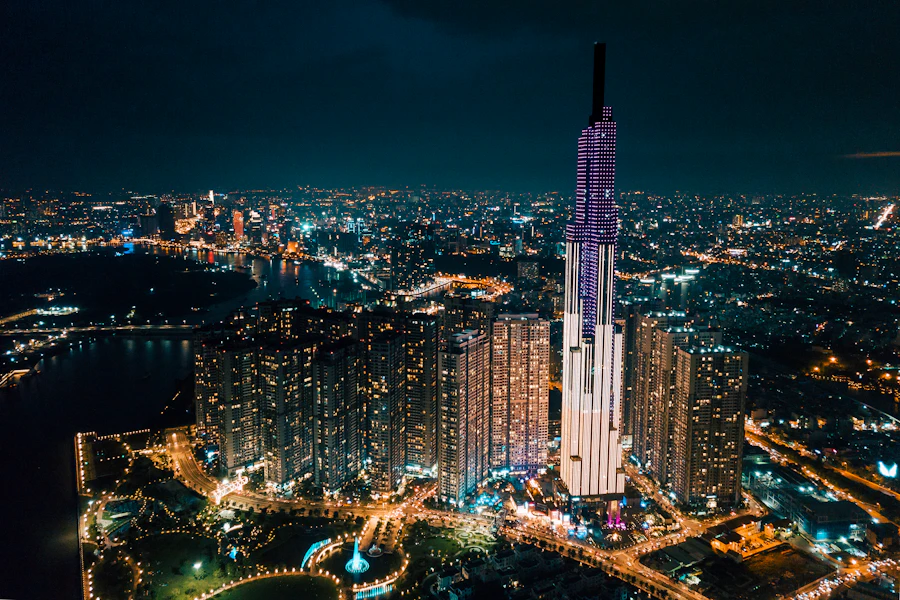
Where cargo lands
Main freight and distribution centres
Ho Chi Minh City
The commercial capital and the largest market, with Cat Lai port and the surrounding industrial zones.
Binh Duong and Dong Nai
The southern industrial belt, dense with manufacturing and a major destination for imported inputs.
Hanoi and Bac Ninh
The northern market and the electronics manufacturing cluster, served by Hai Phong.
Hai Phong
The northern port city and industrial centre, gateway for the whole north of the country.
Da Nang
The central region, with its own port and airport serving a growing industrial base.
Sea freight
Ports of entry and what they mean for your cargo
Cat Lai, Ho Chi Minh City
The busiest container terminal, close to the city and the southern industrial zones, and persistently congested.
Cai Mep
Deepwater port downriver, able to take the largest vessels with direct long-haul services. Less congested but further from the city.
Hai Phong and Lach Huyen
The northern gateway, with Lach Huyen adding deepwater capability for larger vessels serving Hanoi and the electronics cluster.
Da Nang
Central port serving the middle of the country, avoiding a long domestic leg from either end.
Transit from South China is very short, and there are also land border crossings used for cross-border trucking, which for certain cargo is faster than a sea movement.
Cat Lai congestion is a structural feature rather than an occasional event. For time sensitive cargo, Cai Mep is worth pricing even with the longer road leg.
North and south are effectively separate logistics markets. Serving Hanoi through a southern port means a long domestic leg that usually is not worth it.
Air freight
Airports and when air is the right answer
Ho Chi Minh City Tan Son Nhat (SGN)
The main southern air gateway with full cargo facilities.
Hanoi Noi Bai (HAN)
The northern gateway, serving the electronics manufacturing cluster with substantial cargo volume.
Da Nang (DAD)
Central gateway, useful for the middle of the country.
The northern electronics industry generates significant air cargo demand, both inbound components and outbound finished goods, so capacity at Hanoi is better than the market size alone would suggest.
For urgent components feeding a production line, air into the correct region matters more than air into the country, because the domestic leg is long.
Indicative transit times
How long the movement usually takes
- Sea FCL, South China to Cat Lai or Cai MepAround 3 to 8 days port to portVery short transits with frequent services.
- Sea FCL, South China to Hai PhongAround 2 to 6 days port to portEven shorter for the north, given the proximity.
- Cross-border trucking from South ChinaAround 2 to 5 daysA genuine alternative for the right cargo, subject to border crossing conditions.
- Air freight, Hong Kong or South China to VietnamAround 2 to 5 days door to doorFrequent services including handling and clearance.
These ranges are indicative and exist to help you plan. Real transit time depends on the service, the season, the routing and the clearance itself, and we confirm it per shipment rather than publish it as a promise.
Customs
How clearance into Vietnam actually works
The competent authority is General Department of Vietnam Customs.
The Form E certificate of origin under the ASEAN China free trade agreement is what delivers duty relief on Chinese origin goods. Vietnamese customs examines it closely, and discrepancies with the invoice or transport documents, or undeclared third party invoicing, routinely result in the preference being refused.
VAT applies at a standard 10 percent, though temporary reductions have been applied in recent years to support the economy. The current rate should be confirmed at the time of shipment.
Clearance runs through VNACCS, the electronic customs system. It works well, but Vietnamese customs applies documentary requirements formally and inconsistencies are queried rather than overlooked.
Only entities with import rights can act as importer. A foreign company without a Vietnamese entity needs a local importer or a company with the appropriate licence to act on its behalf.
Specialised inspection requirements apply to many product categories, meaning the goods need clearance from a technical authority in addition to customs. These need identifying before shipping.
Documentation
What you need to have ready
Commercial invoice
Value, terms and a precise description. It must agree exactly with the Form E if a preference is claimed.
Packing list
Piece counts, weights and dimensions per package.
Bill of Lading or Air Waybill
The transport contract and the release instrument.
Form E certificate of origin
For ASEAN China FTA duty relief. The most scrutinised document in a Vietnamese import.
Customs declaration through VNACCS
Filed by the importer or its customs broker.
Import licence
Where the product category requires one.
Specialised inspection certificate
From the relevant technical authority for regulated goods.
Vietnamese business registration
Of the importer, showing it holds import rights.
Controlled and restricted goods
What gets stopped, and why
- Form E problems are the single most common cause of unexpected duty on this lane. The certificate has to match the commercial documents precisely.
- Many product categories require specialised inspection by a technical authority before customs will release them.
- Used machinery and equipment face specific age and condition restrictions that are enforced.
- Food, pharmaceuticals and cosmetics require registration with the relevant ministry before import.
- Labelling in Vietnamese is required for goods sold in the domestic market.
- Wood packaging must comply with ISPM 15.
Working with Velonex
What clients usually bring us in for on this lane
- Getting Form E issued and checked before shipping, since a defective certificate turns a duty-free import into a dutiable one after the goods have already arrived.
- Components and materials feeding manufacturing operations, where a stopped line costs more than any freight or duty consideration.
- Choosing between Cat Lai and Cai Mep on the real cost of congestion rather than the headline distance.
- Serving north and south as separate logistics markets rather than trying to run the country from one entry point.
- Used machinery imports, where the age restrictions have to be checked before purchase, not before shipping.
Get a quote
Tell us what needs to move to Vietnam
We listen before we quote. Share the cargo, the deadline and the constraint, and we will come back with a route that accounts for all three, the documents it will need and a timeline we can stand behind.
Your details
Includes your name, company name and email address
Shipment route
Includes your pickup location and destination
Cargo type
Includes the type of cargo you are shipping
Special requirements
Includes a short note about your challenge
Timeline
Includes your desired timeline
Your quote
A tailored response based on everything above

Corporate logistics partner
Trust, clarity and operational follow through for complex cargo.
Not ready for a quote? Email info@velonex-hk.com or message us on WhatsApp with the question and we will answer it.
Sources
Where this information comes from
- General Department of Vietnam Customs
- Ministry of Industry and Trade
- ASEAN China Free Trade Area
- Saigon Newport Corporation, Cat Lai
General guidance, last reviewed August 2026. Customs rules and product requirements change, and the treatment of any specific shipment depends on its classification, origin and value. Confirm the detail with us or with the authority before you commit to a movement.
More in this region
Other guides for Asia Pacific
- AustraliaSydney Opera House
- BangladeshRiver through Dhaka
- IndiaGateway of India, Mumbai
- IndonesiaSelamat Datang Monument, Jakarta
- JapanShibuya crossing, Tokyo
- MalaysiaPetronas Towers, Kuala Lumpur
- New ZealandAuckland skyline and harbour
- PhilippinesManila skyline
- SingaporeMarina Bay, Singapore
- South KoreaNamsan Tower, Seoul
- Sri LankaLotus Tower, Colombo
- TaiwanTaipei 101
- ThailandTemples in Bangkok
See all 51 country guides, or tell us the destination you need and we will walk you through it.