
Shipping guide · Americas
Shipping from China and Hong Kong to Chile
Chile has a free trade agreement with China that has been in force since 2006, and it is the single most valuable thing an importer can use here: with a properly issued certificate of origin, most goods of Chinese origin enter duty free.
- Customs authority
- Servicio Nacional de Aduanas de Chile
- Trade agreement
- China Chile FTA, in force since 2006, with duty relief for qualifying goods
- Standard duty
- A flat 6 percent on most goods where no preference applies
- Import VAT
- IVA, standard rate 19 percent
- Biosecurity
- SAG inspection is strict, protecting Chile pest free agricultural status
- Main entry points
- San Antonio and Valparaiso by sea, Santiago by air
That agreement changes the arithmetic completely. The standard Chilean duty rate is a flat 6 percent on most goods, which is already simple by regional standards, but under the agreement correctly documented Chinese origin goods generally pay nothing. The whole value of that depends on the certificate of origin being right, which makes origin documentation the highest leverage detail in a Chilean import.
Chile is also one of the most administratively straightforward countries in Latin America. Customs is digital, procedures are predictable and the system is not designed to obstruct. The friction is geographic rather than bureaucratic.
That geography is real. Chile is long and narrow, the population and industry concentrate around Santiago and Valparaiso, and the far north and south are served by long domestic legs. Biosecurity is also taken extremely seriously, because Chilean agriculture depends on its pest free status.
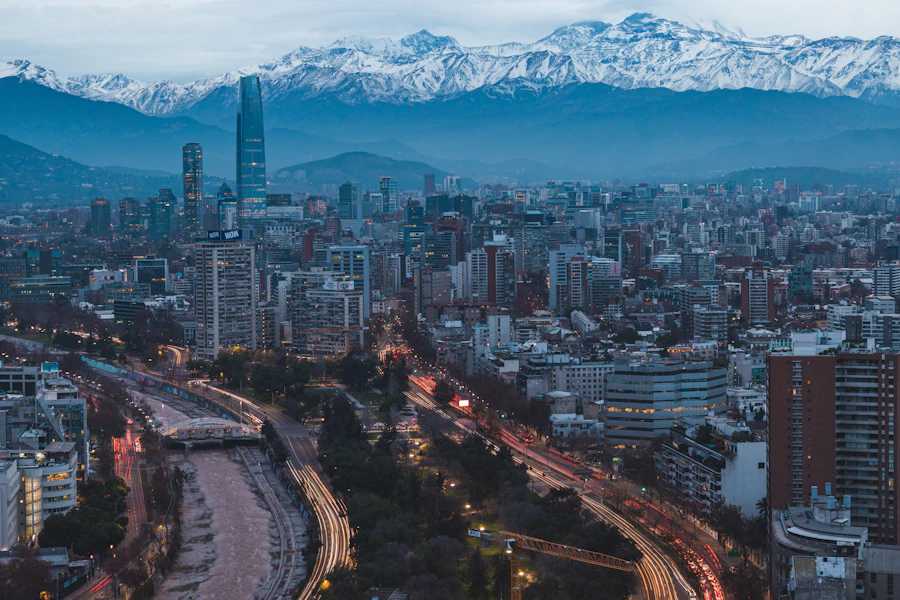
Where cargo lands
Main freight and distribution centres
Santiago
The dominant market, the main air gateway and the centre of customs brokerage and distribution.
Valparaiso and San Antonio
The port cities serving the central region, within a short drive of Santiago.
Antofagasta and Iquique
The northern mining region, with heavy equipment import flows and a free zone at Iquique.
Concepcion and Talcahuano
The southern industrial region, with forestry and manufacturing.
Sea freight
Ports of entry and what they mean for your cargo
San Antonio
The largest Chilean container port, serving Santiago and the central region with the widest choice of Asian services.
Valparaiso
The historic main port, close to Santiago and handling significant container volume alongside San Antonio.
Antofagasta and Iquique
Northern ports serving the mining industry, with Iquique free zone acting as a regional distribution point for the whole Andean area.
Coronel and San Vicente
Southern ports serving the forestry and industrial regions.
San Antonio and Valparaiso are close enough that the choice is usually driven by service schedule and terminal availability rather than by geography.
The Iquique free zone is a genuine regional distribution mechanism, used to serve Bolivia, Peru and northern Argentina as well as Chile. For companies covering the Andean market it is worth understanding rather than ignoring.
Chilean ports have historically been exposed to labour disputes and, on the coast, to swell closures. Neither is common enough to change routing, but both belong in a tight schedule as tolerance.
Air freight
Airports and when air is the right answer
Santiago (SCL)
The main air cargo gateway, with full customs facilities and the widest connectivity in the country.
Iquique (IQQ) and Antofagasta (ANF)
Northern airports serving the mining region, useful for urgent equipment and spares.
Air freight from Asia into Chile routes through a hub, usually in North America or Europe, so the transit is longer than for a direct market.
Mining equipment spares are the classic Chilean air freight case: the value of the shipment is irrelevant next to the cost of an idle operation, which justifies routings that would make no sense otherwise.
Indicative transit times
How long the movement usually takes
- Sea FCL, South China to San Antonio or ValparaisoAround 30 to 40 days port to portDirect Pacific services exist, though many routings include a transhipment.
- Sea LCL, South China to ChileAround 40 to 52 days door to doorConsolidation and deconsolidation add time at both ends.
- Air freight, Hong Kong or South China to SantiagoAround 6 to 10 days door to doorVia a hub, including handling and clearance.
- Domestic leg to the north or southAdd 1 to 4 daysChile geography makes the domestic leg significant for anything outside the central region.
These ranges are indicative and exist to help you plan. Real transit time depends on the service, the season, the routing and the clearance itself, and we confirm it per shipment rather than publish it as a promise.
Customs
How clearance into Chile actually works
The competent authority is Servicio Nacional de Aduanas de Chile.
The China Chile free trade agreement allows most goods of Chinese origin to enter duty free, provided a valid certificate of origin under the agreement accompanies the shipment. Getting that certificate right at origin is worth more than any freight negotiation.
Where no preference applies, Chile charges a flat 6 percent duty on most goods, which is unusually simple compared with tariff schedules that vary line by line.
IVA at 19 percent applies to imports and is recoverable by registered businesses through their regular filings.
Chilean customs is digital and generally efficient. Clearance is fast when the documentation is complete, and the system is not adversarial by design.
A foreign company without a Chilean entity needs a local importer or an importer of record arrangement, since the declarant has to be established in Chile.
Documentation
What you need to have ready
Commercial invoice
Value, terms and a clear description consistent with the transport document.
Packing list
Piece counts, weights and dimensions per package.
Bill of Lading or Air Waybill
The transport contract and the release instrument.
Certificate of origin under the China Chile FTA
The document that delivers the duty relief. Without it, the preference is simply lost.
Chilean tax identification (RUT)
For the importer of record.
SAG documentation
For any goods, packaging or containers subject to agricultural inspection.
Product specific certificates
Health, safety or dangerous goods documentation depending on the cargo.
Import declaration
Filed electronically by the importer or its customs agent.
Controlled and restricted goods
What gets stopped, and why
- SAG, the agricultural and livestock service, inspects seriously. Chile protects its pest free status because its agricultural exports depend on it, and wood packaging, containers and any organic material get real scrutiny.
- Wood packaging must comply with ISPM 15, and this is one of the countries where non compliance genuinely stops shipments.
- Food, plants and animal products require SAG or health authority approval with their own permits.
- Used goods and used vehicles face restrictions and in many categories cannot be imported.
- Electrical products require certification against Chilean standards before they can be sold.
- Mining and industrial chemicals fall under their own control regimes.
Working with Velonex
What clients usually bring us in for on this lane
- Making sure the China Chile FTA certificate of origin is issued correctly at origin, since a mistake there costs the duty relief the whole shipment was priced around.
- Mining equipment and spares for the north, where an idle operation costs far more per day than any freight premium.
- Companies using the Iquique free zone to serve Bolivia, Peru and northern Argentina from a single stock point.
- Cargo subject to SAG scrutiny, where packaging and container condition need to be right before loading rather than argued about on arrival.
- Retail and hospitality projects in Santiago with fixed dates, where the domestic leg and clearance both have to be planned rather than assumed.
Get a quote
Tell us what needs to move to Chile
We listen before we quote. Share the cargo, the deadline and the constraint, and we will come back with a route that accounts for all three, the documents it will need and a timeline we can stand behind.
Your details
Includes your name, company name and email address
Shipment route
Includes your pickup location and destination
Cargo type
Includes the type of cargo you are shipping
Special requirements
Includes a short note about your challenge
Timeline
Includes your desired timeline
Your quote
A tailored response based on everything above

Corporate logistics partner
Trust, clarity and operational follow through for complex cargo.
Not ready for a quote? Email info@velonex-hk.com or message us on WhatsApp with the question and we will answer it.
Sources
Where this information comes from
- Servicio Nacional de Aduanas de Chile
- Servicio Agricola y Ganadero (SAG)
- SUBREI, Chilean trade agreements
- Puerto San Antonio
General guidance, last reviewed August 2026. Customs rules and product requirements change, and the treatment of any specific shipment depends on its classification, origin and value. Confirm the detail with us or with the authority before you commit to a movement.
More in this region
Other guides for Americas
- ArgentinaObelisco, Buenos Aires
- BrazilRio de Janeiro coastline
- CanadaCN Tower and Toronto skyline
- ColombiaOld town, Cartagena
- EcuadorQuito and the Andes
- MexicoMexico City from above
- PanamaPanama City waterfront
- PeruLima coastline
- United StatesManhattan skyline, New York
- UruguayMontevideo waterfront
See all 51 country guides, or tell us the destination you need and we will walk you through it.