
Shipping guide · Europe
Shipping from China and Hong Kong to Germany
Germany is the largest import market in the European Union and the most procedurally exact. Customs here is not slower than elsewhere, but it is less tolerant of inconsistent paperwork, and that is what decides whether a shipment moves or waits.
- Customs union
- European Union, common tariff and common customs code
- Customs authority
- Generalzolldirektion, German Customs (Zoll)
- Declaration system
- ATLAS, the German electronic customs platform
- Import VAT
- Einfuhrumsatzsteuer, standard rate 19 percent
- Importer registration
- EORI number, issued in Germany by the Zoll
- Main entry points
- Hamburg, Bremerhaven, Wilhelmshaven by sea, Frankfurt and Leipzig by air
Hamburg is the country freight identity: a river port, deep inland, with the densest rail network of any European container port. A container discharged in Hamburg can be on a train to Munich, Prague or Poland the same week, which is why it handles cargo for half of central Europe and not only for Germany.
Bremerhaven and Wilhelmshaven cover what Hamburg cannot. Bremerhaven is strong on vehicles and reefer, and Wilhelmshaven is the only German deepwater port able to take the largest vessels fully laden regardless of tide, which matters for the biggest Asian services.
A lot of German cargo never touches a German port at all. Rotterdam and Antwerp are closer to the Rhine industrial belt, and barge services up the river to Duisburg, the largest inland port in the world, are a standard routing rather than an exotic one. Getting this choice right is usually worth more than negotiating the ocean freight.
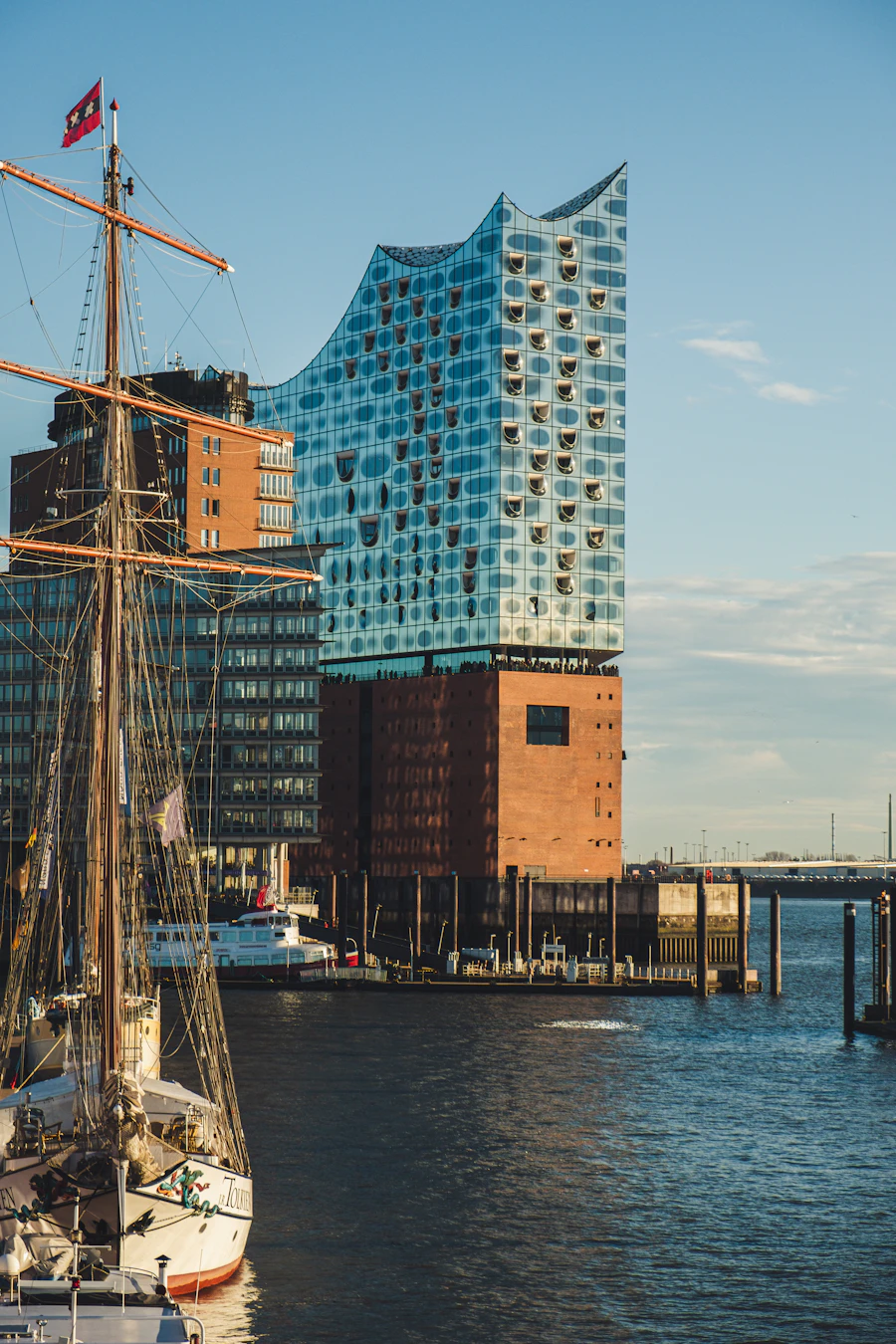
Where cargo lands
Main freight and distribution centres
Hamburg
Port city and the largest logistics cluster in the country, with the deepest pool of customs brokers and warehousing.
Duisburg
The largest inland port in the world, the German end of the Rhine barge corridor and a major terminus for rail from Asia.
Frankfurt
The air cargo capital and the natural distribution point for central Germany.
Munich
Southern industrial hub for automotive, electronics and machinery, well connected by rail to Hamburg and by road to Italy and Austria.
Berlin and Leipzig
The eastern axis, with Leipzig carrying disproportionate air cargo volume as an express hub.
Sea freight
Ports of entry and what they mean for your cargo
Hamburg
The main container gateway, with unmatched rail connectivity inland. Being a river port it has draft limits, so the largest vessels sometimes call elsewhere.
Bremerhaven
Strong on vehicles, reefer cargo and container volume, with good access to the northwest.
Wilhelmshaven (JadeWeserPort)
The only German deepwater container terminal that takes the largest vessels fully laden at any tide, increasingly used by the biggest Asian services.
Rotterdam or Antwerp with Rhine barge
Not German ports, but a normal routing for cargo destined to the Rhine belt. Often cheaper and less congested than discharging in Hamburg and trucking south.
Hamburg rail is the real advantage. If the final destination is in Bavaria, Saxony or beyond into central Europe, rail from Hamburg frequently beats a northern European port plus road, both on cost and on emissions.
For cargo landing in the west, discharging in Rotterdam or Antwerp and moving up the Rhine by barge is standard practice. It is slower than road but predictable and cheap, and it avoids the road driver shortage entirely.
German ports are strict on documentation before release. The time lost in Germany is rarely at sea, it is at the desk.
Air freight
Airports and when air is the right answer
Frankfurt (FRA)
The largest air cargo airport in Europe by volume, with direct freighter services from Asia and every kind of handling capability on site.
Leipzig/Halle (LEJ)
A dedicated freight airport and a major express hub, operating around the clock, which matters for time-critical cargo.
Munich (MUC)
Serves the southern industrial region directly, with good bellyhold capacity from Asia.
Cologne/Bonn (CGN)
Night flight capable and express oriented, useful for urgent shipments into the west.
Germany has more genuine air cargo capacity from Asia than any other European country, so the constraint is rarely the flight. It is customs data and handling slots.
Leipzig and Cologne being night flight capable is a real operational difference. For cargo that has to be on a production line the next morning, that is the routing that delivers it.
Indicative transit times
How long the movement usually takes
- Sea FCL, South China to HamburgAround 30 to 38 days port to portAdd inland rail or road time to the final destination.
- Sea LCL, South China to GermanyAround 38 to 50 days door to doorConsolidation at origin and deconsolidation at destination both add days.
- Rail, China to DuisburgAround 18 to 28 days terminal to terminalFaster than sea and cheaper than air, though capacity and routing have been less stable in recent years.
- Air freight, Hong Kong or South China to FrankfurtAround 4 to 8 days door to doorStandard consolidated service including pickup, handling and clearance.
These ranges are indicative and exist to help you plan. Real transit time depends on the service, the season, the routing and the clearance itself, and we confirm it per shipment rather than publish it as a promise.
Customs
How clearance into Germany actually works
The competent authority is Generalzolldirektion, German Customs (Zoll).
German declarations are filed electronically through ATLAS. The system itself is efficient, but it is unforgiving about inconsistencies between the invoice, the packing list and the transport document, which is the most common reason a German clearance stalls.
Import VAT is 19 percent, with a reduced rate on certain categories. A VAT registered company recovers it through its regular return, so it is a cash flow question rather than a cost, but unlike France it is normally settled at import unless a deferment account is in place.
A deferment account with the Zoll lets duty and import VAT be paid monthly instead of per shipment. For anyone importing regularly this is one of the most useful arrangements available, and it needs to be set up in advance.
The EORI number for a German importer is issued by the Zoll itself. A company with no EU establishment cannot act as importer of record and needs an Importer of Record arrangement or an indirect representative.
Germany applies the EU Common Customs Tariff, so the duty rate is determined by the HS classification. Binding Tariff Information can be requested where the classification of a product is genuinely uncertain and the volumes justify the certainty.
Documentation
What you need to have ready
Commercial invoice
German customs cross checks this against everything else. Any mismatch is a query.
Packing list
Package level weights and dimensions, consistent with the transport document.
Bill of Lading or Air Waybill
The transport contract and the release instrument.
EORI number
Issued by the Zoll for German established companies, required before the first clearance.
Certificate of origin
Required to claim preferential duty rates where an agreement exists.
CE marking and declaration of conformity
Enforced seriously for electronics, machinery, toys and lighting. Market surveillance in Germany is active, not theoretical.
Battery and packaging registrations
Products with batteries or sold in packaging carry German producer registration obligations that sit outside customs but stop sales if missing.
Product specific certificates
Phytosanitary, veterinary, CITES or dangerous goods documentation as applicable.
Controlled and restricted goods
What gets stopped, and why
- Market surveillance on CE marked products is genuinely active in Germany. Electronics, chargers, lighting and toys arriving without a proper conformity file are a real risk, not a formality.
- Products containing batteries, and goods sold in packaging, trigger German producer responsibility registrations. These are not customs requirements, but importing without them creates a problem the moment the goods are sold.
- Food, plants and animal origin products must enter through an approved border control post with the corresponding sanitary certification.
- Dual use goods and technology under export control are scrutinised carefully, and Germany enforces this seriously.
- Counterfeit enforcement at Hamburg is systematic. Branded goods should be accompanied by evidence of legitimate supply.
- Wood packaging must comply with ISPM 15 and carry the mark.
Working with Velonex
What clients usually bring us in for on this lane
- Electronics and devices entering a market where conformity documentation is actually checked, so the paperwork has to be right before the cargo sails rather than fixed afterwards.
- Machinery, components and project cargo for the southern industrial belt, where Hamburg plus rail usually beats a western port plus road.
- Importers weighing Hamburg against Rotterdam with a Rhine barge leg, where the right answer depends entirely on the delivery postcode.
- Companies with no German entity that need an Importer of Record or indirect representation arrangement in place before the first shipment.
- Time-critical cargo that can use the night flight capability at Leipzig or Cologne instead of waiting for a daytime slot at a passenger airport.
Get a quote
Tell us what needs to move to Germany
We listen before we quote. Share the cargo, the deadline and the constraint, and we will come back with a route that accounts for all three, the documents it will need and a timeline we can stand behind.
Your details
Includes your name, company name and email address
Shipment route
Includes your pickup location and destination
Cargo type
Includes the type of cargo you are shipping
Special requirements
Includes a short note about your challenge
Timeline
Includes your desired timeline
Your quote
A tailored response based on everything above

Corporate logistics partner
Trust, clarity and operational follow through for complex cargo.
Not ready for a quote? Email info@velonex-hk.com or message us on WhatsApp with the question and we will answer it.
Sources
Where this information comes from
- Zoll, German Customs
- European Commission, TARIC tariff database
- Port of Hamburg
- Bundesnetzagentur, product market surveillance
General guidance, last reviewed August 2026. Customs rules and product requirements change, and the treatment of any specific shipment depends on its classification, origin and value. Confirm the detail with us or with the authority before you commit to a movement.
More in this region
Other guides for Europe
- AustriaSt Stephen's Cathedral, Vienna
- BelgiumAntwerp from above
- CzechiaCharles Bridge and Prague Castle
- DenmarkNyhavn, Copenhagen
- FinlandHelsinki Cathedral and waterfront
- FranceEiffel Tower, Paris
- GreeceAcropolis of Athens
- HungaryHungarian Parliament on the Danube
- IrelandDublin street
- ItalyColosseum, Rome
- NetherlandsRotterdam waterfront
- NorwayOslo waterfront
- PolandGdansk from above
- PortugalYellow tram in Lisbon
- RomaniaPalace of the Parliament, Bucharest
- SpainTemple del Sagrat Cor on Tibidabo, Barcelona
- SwedenGamla Stan, Stockholm
- SwitzerlandZurich from above
- TürkiyeFerry on the Bosphorus, Istanbul
- United KingdomTower Bridge and the City, London
See all 51 country guides, or tell us the destination you need and we will walk you through it.