
Shipping guide · Americas
Shipping from China and Hong Kong to Ecuador
Ecuador uses the US dollar as its currency, which removes the exchange risk that complicates trade elsewhere in the region. What it does not remove is the INEN conformity requirement, which is where most Asian imports actually get stuck.
- Customs authority
- SENAE, Servicio Nacional de Aduana del Ecuador
- Currency
- The US dollar, so no exchange risk or currency access issue
- Product control
- INEN certificate of conformity required for many product categories
- Import VAT
- IVA, standard rate currently 15 percent
- Trade bloc
- Andean Community, with its own tariff structure
- Main entry points
- Guayaquil and Posorja by sea, Quito and Guayaquil by air
A large range of products entering Ecuador require a certificate of conformity against the applicable Ecuadorian technical regulation before they can be cleared. This covers many everyday categories, including electrical goods, appliances, textiles, footwear and toys, and the certification has to exist before the goods arrive rather than be arranged afterwards.
Guayaquil is the commercial and port capital and handles the large majority of container traffic. The deepwater terminal at Posorja, further out towards the ocean, added capacity for larger vessels and direct services, changing the options for cargo that used to have to transhipment.
Dollarisation makes the commercial side simpler than in most neighbouring countries: pricing, settlement and supplier payment do not involve a currency conversion or exchange access question.
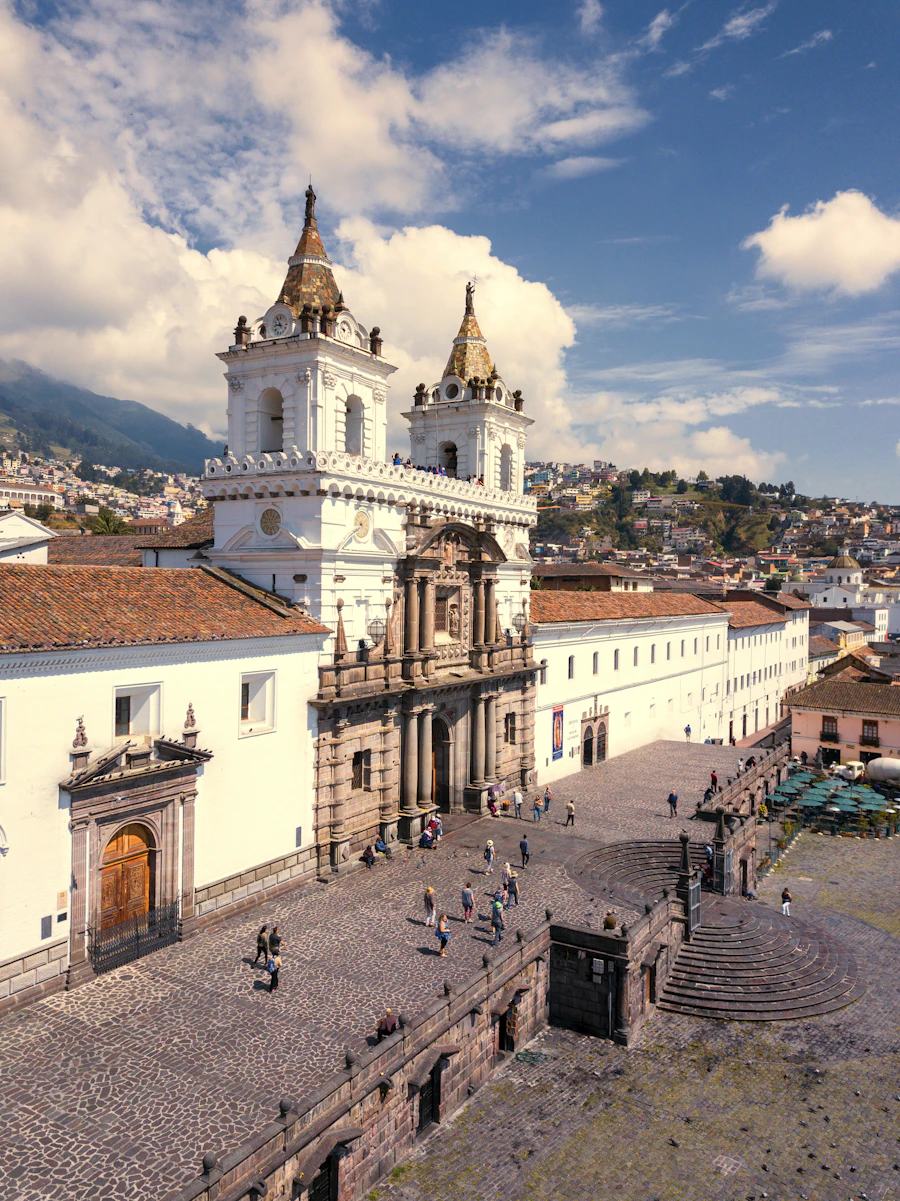
Where cargo lands
Main freight and distribution centres
Guayaquil
The commercial capital and the main port, handling most of the country import volume.
Quito
The administrative capital at altitude, the second market and a significant air gateway.
Cuenca
Southern manufacturing city, with appliance and ceramics industries.
Manta
Coastal port city with fishing and industrial activity, and an alternative maritime entry point.
Sea freight
Ports of entry and what they mean for your cargo
Guayaquil
The main port, on the river, serving the commercial capital directly and handling the majority of containers.
Posorja
The deepwater terminal on the ocean, able to take larger vessels and offering direct services that avoid the river approach.
Manta
Deepwater coastal port used for industrial, fishing and project cargo.
Puerto Bolivar
Southern port, mainly agricultural export oriented but usable for imports serving the region.
Posorja opened up direct calls for larger vessels, so cargo that previously had to transhipment for Ecuador can now sometimes arrive directly. Whether it suits a specific shipment depends on the service and the destination.
Guayaquil river approach imposes limits on vessel size, which is why the deepwater alternative matters rather than being a duplicate facility.
Ecuador is on the Pacific and reasonably close to the Panama Canal, so transhipment options through Panama and Mexico are plentiful when a direct service is not available.
Air freight
Airports and when air is the right answer
Quito Mariscal Sucre (UIO)
Main air gateway for the capital region, with full customs facilities.
Guayaquil Jose Joaquin de Olmedo (GYE)
Serves the commercial capital and the coastal region directly.
Air freight from Asia arrives via a hub, most often in North America, so the transit is longer than for a direct market.
The INEN certification requirement applies regardless of transport mode, so flying urgent cargo in does not avoid the conformity question.
Indicative transit times
How long the movement usually takes
- Sea FCL, South China to Guayaquil or PosorjaAround 28 to 40 days port to portDirect services exist to the deepwater terminal, otherwise with a transhipment.
- Sea LCL, South China to EcuadorAround 38 to 52 days door to doorConsolidation and deconsolidation add time at both ends.
- Air freight, Hong Kong or South China to Quito or GuayaquilAround 6 to 10 days door to doorVia a hub, including handling and clearance.
- INEN certification lead timeArrange before shippingCertification is a process with testing, not a document produced on request.
These ranges are indicative and exist to help you plan. Real transit time depends on the service, the season, the routing and the clearance itself, and we confirm it per shipment rather than publish it as a promise.
Customs
How clearance into Ecuador actually works
The competent authority is SENAE, Servicio Nacional de Aduana del Ecuador.
The INEN conformity requirement is the practical gate for Asian imports. Products covered by an Ecuadorian technical regulation need a certificate of conformity issued by a recognised body, and without it the goods cannot be cleared. This is the requirement that most commonly surprises new importers.
IVA is charged on imports at the standard rate, currently 15 percent, and registered businesses recover it through their filings. Ecuador has adjusted this rate, so it is worth confirming at the time of shipment.
Duty follows the Andean Community tariff structure based on classification, and Ecuador has periodically applied additional measures to protect domestic industry, particularly on consumer goods.
Because the economy is dollarised, there is no foreign exchange access issue for paying suppliers, which removes an entire category of problem present elsewhere in the region.
A foreign company without an Ecuadorian entity needs a local importer, since the declarant must be established in the country.
Documentation
What you need to have ready
Commercial invoice
Value, terms and a clear description consistent with the transport document.
Packing list
Piece counts, weights and dimensions per package.
Bill of Lading or Air Waybill
The transport contract and the release instrument.
INEN certificate of conformity
Required for regulated products before clearance. Must exist before arrival.
Ecuadorian tax identification (RUC)
For the importer of record.
Certificate of origin
Where a trade agreement provides preferential treatment.
Sanitary registration
ARCSA approval for food, cosmetics, medicines and health products.
Import declaration
Filed by the importer or its customs agent in the SENAE system.
Controlled and restricted goods
What gets stopped, and why
- INEN technical regulations cover a wide range of consumer and electrical goods, and clearance is not possible without the corresponding conformity certificate.
- Food, cosmetics, medicines and health products require sanitary registration from ARCSA, obtained before import.
- Plants, wood and animal products fall under Agrocalidad with phytosanitary requirements.
- Textiles, footwear and certain consumer goods have been subject to additional protective measures at various points.
- Used goods face restrictions across most categories.
- Wood packaging must comply with ISPM 15.
Working with Velonex
What clients usually bring us in for on this lane
- Getting INEN certification organised before the goods ship, which is the single most common reason an Ecuadorian import goes wrong.
- Comparing a direct Posorja call against a transhipment routing to Guayaquil, which is a genuinely new option for many importers.
- Appliance, electrical and textile importers, exactly the categories where the conformity requirements bite hardest.
- Companies that value the dollarised environment for supplier payment, and want the rest of the operation to be as predictable as the currency.
- Foreign companies with no Ecuadorian entity, who need a local importer structure before shipping.
Get a quote
Tell us what needs to move to Ecuador
We listen before we quote. Share the cargo, the deadline and the constraint, and we will come back with a route that accounts for all three, the documents it will need and a timeline we can stand behind.
Your details
Includes your name, company name and email address
Shipment route
Includes your pickup location and destination
Cargo type
Includes the type of cargo you are shipping
Special requirements
Includes a short note about your challenge
Timeline
Includes your desired timeline
Your quote
A tailored response based on everything above

Corporate logistics partner
Trust, clarity and operational follow through for complex cargo.
Not ready for a quote? Email info@velonex-hk.com or message us on WhatsApp with the question and we will answer it.
Sources
Where this information comes from
- SENAE, Ecuadorian customs
- INEN, Ecuadorian standardisation service
- ARCSA, health regulation agency
- Autoridad Portuaria de Guayaquil
General guidance, last reviewed August 2026. Customs rules and product requirements change, and the treatment of any specific shipment depends on its classification, origin and value. Confirm the detail with us or with the authority before you commit to a movement.
More in this region
Other guides for Americas
- ArgentinaObelisco, Buenos Aires
- BrazilRio de Janeiro coastline
- CanadaCN Tower and Toronto skyline
- ChileSantiago skyline
- ColombiaOld town, Cartagena
- MexicoMexico City from above
- PanamaPanama City waterfront
- PeruLima coastline
- United StatesManhattan skyline, New York
- UruguayMontevideo waterfront
See all 51 country guides, or tell us the destination you need and we will walk you through it.