
Shipping guide · Europe
Shipping from China and Hong Kong to Poland
Poland is the only EU country that is a serious destination by sea and by rail at the same time. Gdansk takes the largest vessels on direct Asian services, and the main rail corridor from China enters the European Union at the Polish border.
- Customs union
- European Union, common tariff and common customs code
- Customs authority
- Krajowa Administracja Skarbowa (KAS), National Revenue Administration
- Import VAT
- VAT, standard rate 23 percent
- VAT deferment
- Article 33a allows import VAT to be settled on the VAT return
- Rail option
- Main EU entry point for container rail services from China
- Main entry points
- Gdansk and Gdynia by sea, Warsaw and Katowice by air
The deepwater terminal at Gdansk changed Poland from a feeder market into a first call destination. Vessels that previously discharged Polish cargo in Hamburg or Rotterdam now come directly, which removes a feeder leg and several days from the transit.
The rail corridor is the other half of the picture. Container trains from China cross into the EU at the Polish eastern border, and Poland is where that cargo is transhipped between the wider eastern gauge and the European gauge. Rail sits between sea and air on both cost and speed, and for the right cargo it is the most sensible option available.
Underneath both is the fact that Poland has become one of the main manufacturing and distribution bases in Europe. A lot of cargo arriving here is not for the Polish market at all, it is components and stock feeding factories and warehouses that serve Germany and the rest of the union.
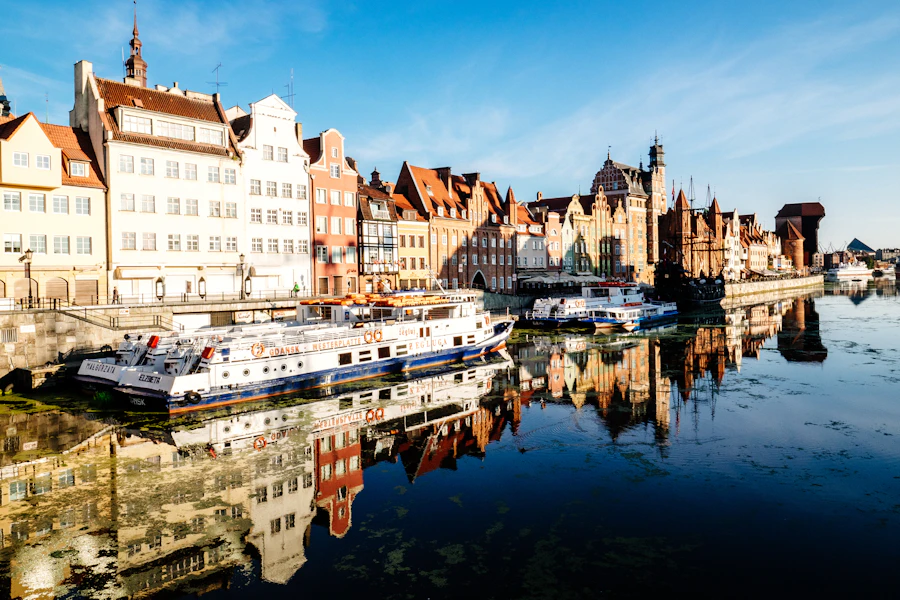
Where cargo lands
Main freight and distribution centres
Warsaw
The largest market and the administrative centre, with the main air cargo gateway and a dense ring of distribution centres.
Gdansk and Gdynia
The Baltic port complex, and the logistics cluster that has grown around the deepwater terminal.
Lodz
Centrally placed, the traditional textile region and now a major rail terminal for China to Europe services.
Poznan and Wroclaw
The western manufacturing belt, close to the German border and heavily used for European distribution.
Katowice and Upper Silesia
The southern industrial region, with strong automotive and heavy manufacturing and its own cargo airport.
Sea freight
Ports of entry and what they mean for your cargo
Gdansk
The deepwater container terminal that takes the largest vessels on direct Asian services. The reason Polish cargo no longer has to arrive via a German or Dutch feeder.
Gdynia
The second Baltic port, next door to Gdansk, handling containers, ro-ro and general cargo.
Szczecin and Swinoujscie
The western Baltic ports, closer to Berlin than to Warsaw, handling bulk, project and shortsea traffic.
A direct call at Gdansk versus a German port plus a road or feeder leg is a genuine comparison, and it usually favours Gdansk for Polish cargo. It sometimes also favours Gdansk for cargo destined to eastern Germany or the Baltic states.
Gdansk also acts as a Baltic hub, feeding the Nordic and Baltic markets. For cargo continuing beyond Poland this can be an efficient entry point rather than a detour.
Inland connections from the coast to Warsaw and Silesia are long by Polish standards. Road is the default, rail works for volume, and both need to be in the transit estimate rather than added as an afterthought.
Air freight
Airports and when air is the right answer
Warsaw Chopin (WAW)
The main air cargo gateway with the widest connectivity and full customs facilities.
Katowice (KTW)
Genuinely cargo oriented, serving the southern industrial region with freighter capacity.
Warsaw Modlin and Rzeszow
Secondary airports handling charter and specialised cargo, including outsized movements.
Air freight from Asia into Poland usually routes through a larger European hub, so the realistic transit is a day or two longer than into Frankfurt.
For cargo destined to Silesia, flying into Katowice instead of Warsaw removes a road leg of several hours, which matters when the shipment is urgent enough to justify air in the first place.
Indicative transit times
How long the movement usually takes
- Sea FCL, South China to GdanskAround 32 to 40 days port to portDirect calls avoid the feeder leg that used to add a week.
- Rail, China to PolandAround 16 to 25 days terminal to terminalBetween sea and air on both cost and speed. Capacity and routing have been less stable in recent years, so it needs confirming per shipment.
- Sea LCL, South China to PolandAround 40 to 52 days door to doorConsolidation and deconsolidation add time at both ends.
- Air freight, Hong Kong or South China to WarsawAround 5 to 9 days door to doorUsually one stop via a larger European hub.
These ranges are indicative and exist to help you plan. Real transit time depends on the service, the season, the routing and the clearance itself, and we confirm it per shipment rather than publish it as a promise.
Customs
How clearance into Poland actually works
The competent authority is Krajowa Administracja Skarbowa (KAS), National Revenue Administration.
Poland applies the EU Common Customs Tariff, so duty follows the HS classification of the goods.
Import VAT is 23 percent, and the Article 33a procedure allows a qualifying importer to settle it on the periodic VAT return instead of paying at clearance. For anyone importing regularly this is the difference between financing 23 percent per container and not financing it at all.
An EORI number is required, and the Polish administration handles registration electronically. A company with no EU establishment needs an Importer of Record arrangement or an indirect representative.
Rail arrivals from China are customs movements like any other, but the transhipment point and the party filing the declaration are different from a sea import. It is worth confirming who is doing what before the train arrives rather than after.
Poland is heavily used as a customs entry point for cargo that is really destined elsewhere in the EU. That is legitimate and common, but it means deciding deliberately whether to clear in Poland or move under transit.
Documentation
What you need to have ready
Commercial invoice
Value, terms and clear goods description, consistent with the transport document.
Packing list
Piece counts, weights and dimensions per package.
Bill of Lading, Air Waybill or rail consignment note
The transport contract. Rail movements use their own consignment documentation.
EORI number
Required for any operator dealing with EU customs.
Polish VAT registration
Needed to use the Article 33a import VAT settlement on the return.
Certificate of origin
Where preferential duty treatment is claimed.
CE conformity documentation
For electronics, machinery, toys, lighting and construction products.
Product specific certificates
Phytosanitary, veterinary, CITES or dangerous goods documentation as applicable.
Controlled and restricted goods
What gets stopped, and why
- Product conformity checks on consumer electronics, toys and lighting are routine, and a missing declaration of conformity stops the release.
- Food, plants and animal origin products must enter through an approved border control post with sanitary or phytosanitary certification.
- Poland sits on the EU eastern frontier, so sanctions and export control enforcement is taken extremely seriously, including for goods that could be re-exported eastwards.
- Dual use goods and controlled technology require licences.
- Excise goods, including alcohol, tobacco and energy products, have their own procedures alongside customs.
- Wood packaging must comply with ISPM 15 and carry the mark.
Working with Velonex
What clients usually bring us in for on this lane
- Importers who should genuinely be comparing sea, rail and air rather than defaulting to one, since Poland is the one market where all three are realistic.
- Components and stock for the manufacturing belt around Poznan, Wroclaw and Silesia, where a direct Gdansk call beats routing through Germany.
- Cargo destined to the Baltic states or eastern Germany, where Gdansk can be the most efficient EU entry point.
- Companies needing Article 33a VAT settlement set up before the first shipment, so the cash is never tied up at the border.
- Sensitive or high-value cargo entering near the EU eastern frontier, where sanctions and control checks are stricter and documentation has to be beyond question.
Get a quote
Tell us what needs to move to Poland
We listen before we quote. Share the cargo, the deadline and the constraint, and we will come back with a route that accounts for all three, the documents it will need and a timeline we can stand behind.
Your details
Includes your name, company name and email address
Shipment route
Includes your pickup location and destination
Cargo type
Includes the type of cargo you are shipping
Special requirements
Includes a short note about your challenge
Timeline
Includes your desired timeline
Your quote
A tailored response based on everything above

Corporate logistics partner
Trust, clarity and operational follow through for complex cargo.
Not ready for a quote? Email info@velonex-hk.com or message us on WhatsApp with the question and we will answer it.
Sources
Where this information comes from
- Polish National Revenue Administration, tax and customs portal
- European Commission, TARIC tariff database
- Port of Gdansk Authority
- Port of Gdynia Authority
General guidance, last reviewed August 2026. Customs rules and product requirements change, and the treatment of any specific shipment depends on its classification, origin and value. Confirm the detail with us or with the authority before you commit to a movement.
More in this region
Other guides for Europe
- AustriaSt Stephen's Cathedral, Vienna
- BelgiumAntwerp from above
- CzechiaCharles Bridge and Prague Castle
- DenmarkNyhavn, Copenhagen
- FinlandHelsinki Cathedral and waterfront
- FranceEiffel Tower, Paris
- GermanyShip at Hamburg harbour
- GreeceAcropolis of Athens
- HungaryHungarian Parliament on the Danube
- IrelandDublin street
- ItalyColosseum, Rome
- NetherlandsRotterdam waterfront
- NorwayOslo waterfront
- PortugalYellow tram in Lisbon
- RomaniaPalace of the Parliament, Bucharest
- SpainTemple del Sagrat Cor on Tibidabo, Barcelona
- SwedenGamla Stan, Stockholm
- SwitzerlandZurich from above
- TürkiyeFerry on the Bosphorus, Istanbul
- United KingdomTower Bridge and the City, London
See all 51 country guides, or tell us the destination you need and we will walk you through it.