
Shipping guide · Europe
Shipping from China and Hong Kong to Denmark
Denmark is a small, efficient and expensive market with an outsized position in global shipping. Clearance here is fast and digital, and the main planning question is whether cargo comes directly to a Danish port or through a larger continental hub.
- Customs union
- European Union, common tariff and common customs code
- Customs authority
- Toldstyrelsen, the Danish Customs Agency
- Import VAT
- Moms, standard rate 25 percent with no reduced rate for most goods
- Importer registration
- EORI number, plus Danish VAT registration for a local importer
- Market note
- Copenhagen and Malmo function as a single cross-border logistics area
- Main entry points
- Aarhus by sea, Copenhagen and Billund by air
Aarhus is the only Danish port with meaningful direct container capacity, and it handles the majority of the country container traffic. Copenhagen operates jointly with Malmo across the sound, which effectively makes the Danish and southern Swedish markets one logistics area.
A great deal of Danish cargo still arrives via Hamburg, Bremerhaven or Rotterdam and moves north by road or feeder. That is not inefficiency, it is service frequency: the large hubs simply have more sailings, and for LCL in particular the choice of consolidation is much wider.
Danish administration is genuinely straightforward. Customs is digital, communication in English is normal, and the practical difficulties tend to be commercial rather than bureaucratic. The 25 percent VAT rate is high, so the deferment arrangement matters for cash flow.
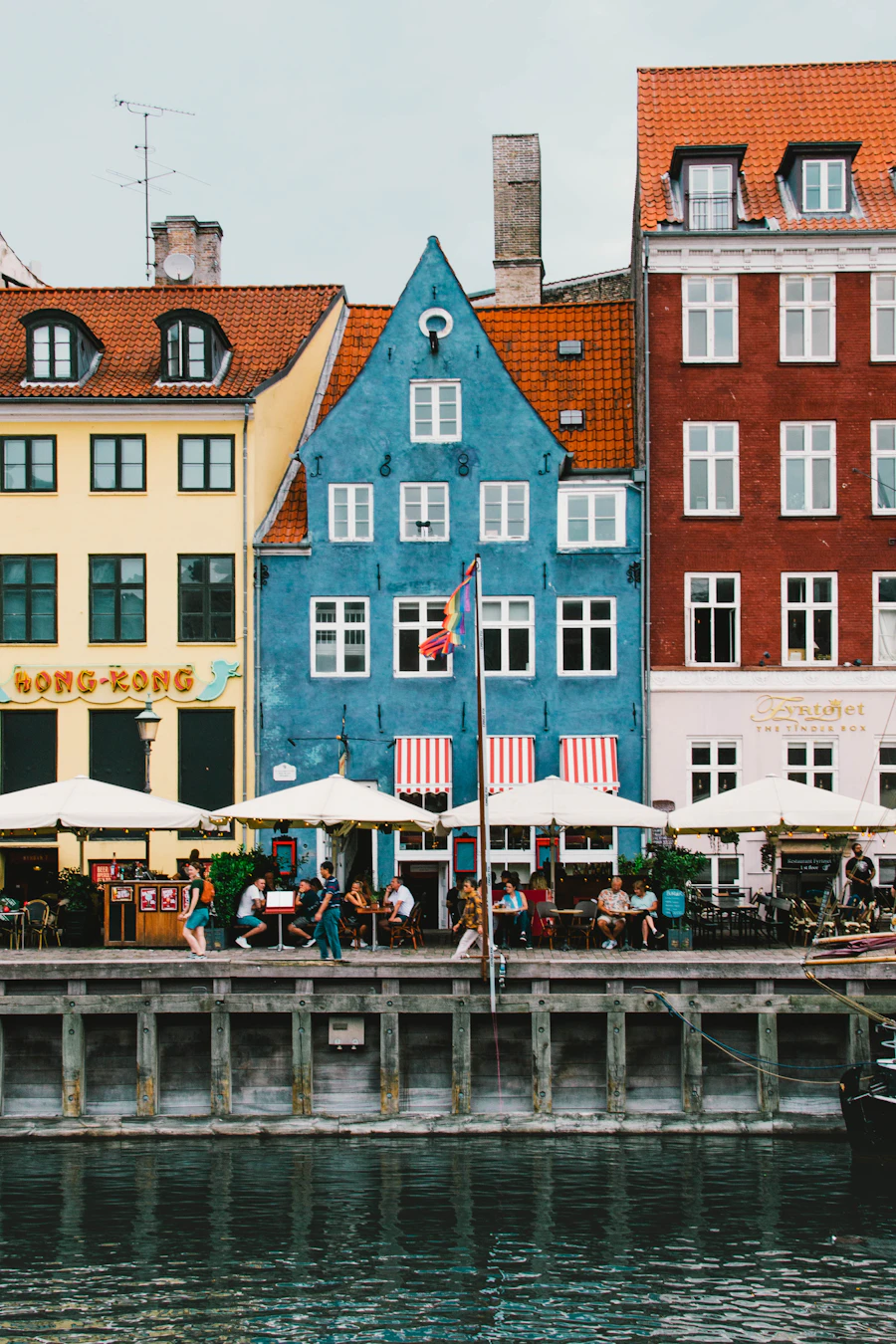
Where cargo lands
Main freight and distribution centres
Copenhagen
The largest market and the main air gateway, operating as one logistics area with Malmo in Sweden across the bridge.
Aarhus
The main container port and the logistics centre of Jutland, where most national distribution actually sits.
Billund and Vejle
Central Jutland, with a cargo capable airport and a dense manufacturing and design industry around it.
Aalborg
Northern Jutland, serving the north of the country with its own port and airport.
Sea freight
Ports of entry and what they mean for your cargo
Aarhus
The largest Danish container port, with direct calls and the deepest handling capacity in the country.
Copenhagen-Malmo Port
A jointly operated Danish and Swedish port, strong on ro-ro, vehicles and cruise, and convenient for the capital region.
Aalborg and Esbjerg
Regional ports handling project cargo, wind energy components and offshore industry traffic. Esbjerg in particular is a European centre for wind turbine logistics.
Hamburg or Bremerhaven, Germany
Not Danish, but a common entry point for Danish cargo, with a short road or feeder leg north.
Direct to Aarhus versus a German hub plus a road leg is the standard comparison. Aarhus wins on simplicity, the German ports on frequency and LCL options.
Esbjerg is genuinely specialised in wind and offshore project cargo. For oversized energy components it has handling capability that a container port does not.
Distances within Denmark are short, so once cargo is in the country the inland leg is rarely the constraint.
Air freight
Airports and when air is the right answer
Copenhagen (CPH)
The main Nordic air cargo gateway, with the widest connectivity and full customs and handling facilities.
Billund (BLL)
Freight oriented and centrally placed in Jutland, convenient for the manufacturing region.
Aalborg (AAL)
Regional airport serving northern Denmark for smaller urgent shipments.
Copenhagen is the natural Nordic hub and has good direct capacity from Asia, so air freight into Denmark rarely needs an awkward routing.
For cargo destined to Jutland, flying into Billund avoids crossing the country by road, which is worth doing when the shipment is urgent enough to justify air.
Indicative transit times
How long the movement usually takes
- Sea FCL, South China to AarhusAround 33 to 42 days port to portDirect calls, or a short feeder leg from a larger northern European hub.
- Sea FCL via Hamburg with road to DenmarkAround 32 to 41 days door to doorOften more service options, with a road leg of under a day.
- Sea LCL, South China to DenmarkAround 38 to 50 days door to doorUsually consolidated via a larger hub, which adds handling time.
- Air freight, Hong Kong or South China to CopenhagenAround 4 to 8 days door to doorStandard consolidated service including pickup, handling and clearance.
These ranges are indicative and exist to help you plan. Real transit time depends on the service, the season, the routing and the clearance itself, and we confirm it per shipment rather than publish it as a promise.
Customs
How clearance into Denmark actually works
The competent authority is Toldstyrelsen, Danish Customs Agency.
Denmark applies the EU Common Customs Tariff, so duty depends on the HS classification of the goods.
Import VAT is 25 percent, one of the highest rates in the EU, and Denmark applies it broadly without the reduced rates common elsewhere. Danish registered importers normally use a deferment arrangement so that VAT is settled through the VAT return instead of paid at the border, which matters a great deal at that rate.
Customs administration is digital and efficient, and English is used comfortably throughout, which lowers the friction for foreign companies considerably.
An EORI number is required. A company with no EU establishment needs an Importer of Record arrangement or an indirect representative.
Because a lot of Danish cargo enters the EU through Germany or the Netherlands, the choice between clearing at the port of entry and moving under transit to clear in Denmark comes up regularly and should be made deliberately.
Documentation
What you need to have ready
Commercial invoice
Value, terms and clear description consistent with the transport document.
Packing list
Piece counts, weights and dimensions per package.
Bill of Lading or Air Waybill
The transport contract and the release instrument.
EORI number
Required for any operator dealing with EU customs.
Danish VAT registration
For the local importer, and needed to use VAT deferment rather than paying at the border.
Certificate of origin
Where preferential duty treatment is being claimed.
CE conformity documentation
For electronics, machinery, toys, lighting and construction products.
Product specific certificates
Phytosanitary, veterinary, CITES or dangerous goods documentation as applicable.
Controlled and restricted goods
What gets stopped, and why
- Denmark applies EU product safety rules seriously, and Danish consumer protection enforcement is active, particularly on goods aimed at children.
- Food, plants and animal origin products require an approved border control post with the corresponding certification.
- Chemicals face REACH obligations alongside customs requirements.
- Dual use goods and export controlled technology require licences.
- Alcohol, tobacco and certain sugary and energy products carry Danish excise duties on top of customs duty and VAT.
- Wood packaging must comply with ISPM 15 and carry the mark.
Working with Velonex
What clients usually bring us in for on this lane
- Wind, energy and offshore project cargo through Esbjerg, where the handling capability is genuinely specialised rather than generic.
- Design, furniture and retail imports for a market where product compliance and documentation are checked properly.
- Importers weighing a direct Aarhus call against a German port plus a short road leg, where LCL frequency often decides the answer.
- Companies serving both Denmark and southern Sweden, where Copenhagen and Malmo work as one distribution area across a national border.
- Setting up VAT deferment before the first shipment, which at a 25 percent rate is one of the more valuable arrangements to have in place.
Get a quote
Tell us what needs to move to Denmark
We listen before we quote. Share the cargo, the deadline and the constraint, and we will come back with a route that accounts for all three, the documents it will need and a timeline we can stand behind.
Your details
Includes your name, company name and email address
Shipment route
Includes your pickup location and destination
Cargo type
Includes the type of cargo you are shipping
Special requirements
Includes a short note about your challenge
Timeline
Includes your desired timeline
Your quote
A tailored response based on everything above

Corporate logistics partner
Trust, clarity and operational follow through for complex cargo.
Not ready for a quote? Email info@velonex-hk.com or message us on WhatsApp with the question and we will answer it.
Sources
Where this information comes from
- Danish Customs Agency, Toldstyrelsen
- European Commission, TARIC tariff database
- Port of Aarhus
- Port of Esbjerg
General guidance, last reviewed August 2026. Customs rules and product requirements change, and the treatment of any specific shipment depends on its classification, origin and value. Confirm the detail with us or with the authority before you commit to a movement.
More in this region
Other guides for Europe
- AustriaSt Stephen's Cathedral, Vienna
- BelgiumAntwerp from above
- CzechiaCharles Bridge and Prague Castle
- FinlandHelsinki Cathedral and waterfront
- FranceEiffel Tower, Paris
- GermanyShip at Hamburg harbour
- GreeceAcropolis of Athens
- HungaryHungarian Parliament on the Danube
- IrelandDublin street
- ItalyColosseum, Rome
- NetherlandsRotterdam waterfront
- NorwayOslo waterfront
- PolandGdansk from above
- PortugalYellow tram in Lisbon
- RomaniaPalace of the Parliament, Bucharest
- SpainTemple del Sagrat Cor on Tibidabo, Barcelona
- SwedenGamla Stan, Stockholm
- SwitzerlandZurich from above
- TürkiyeFerry on the Bosphorus, Istanbul
- United KingdomTower Bridge and the City, London
See all 51 country guides, or tell us the destination you need and we will walk you through it.